Did you see those photos of the desert, or read The Alchemist, and start wishing you could go too: to stand under dunes tens of meters high, to see locals in turbans and caravans of camels, to sleep in a desert camp in an oasis? Morocco offers all of that — but how do you actually plan it? I ran into the same problem when I was putting together an itinerary for me and my friends: hours of research online, and you still only really understand it once you're standing there. So now that I've done the trip, here's what I learned: what your options are, whether it's better to rent a car and go on your own or join an organized tour, how you get to a desert camp, how the camel rides work, and a lot more.
The Moroccan desert: a few basics
Even though the Sahara stretches across most of northern Africa, the overwhelming majority of it is not covered in the sand dunes we picture from books and Instagram. Only about a quarter of its surface is sand. The rest is mostly reg — flat plains of gravel and stone — and hamada, bare rocky plateaus.
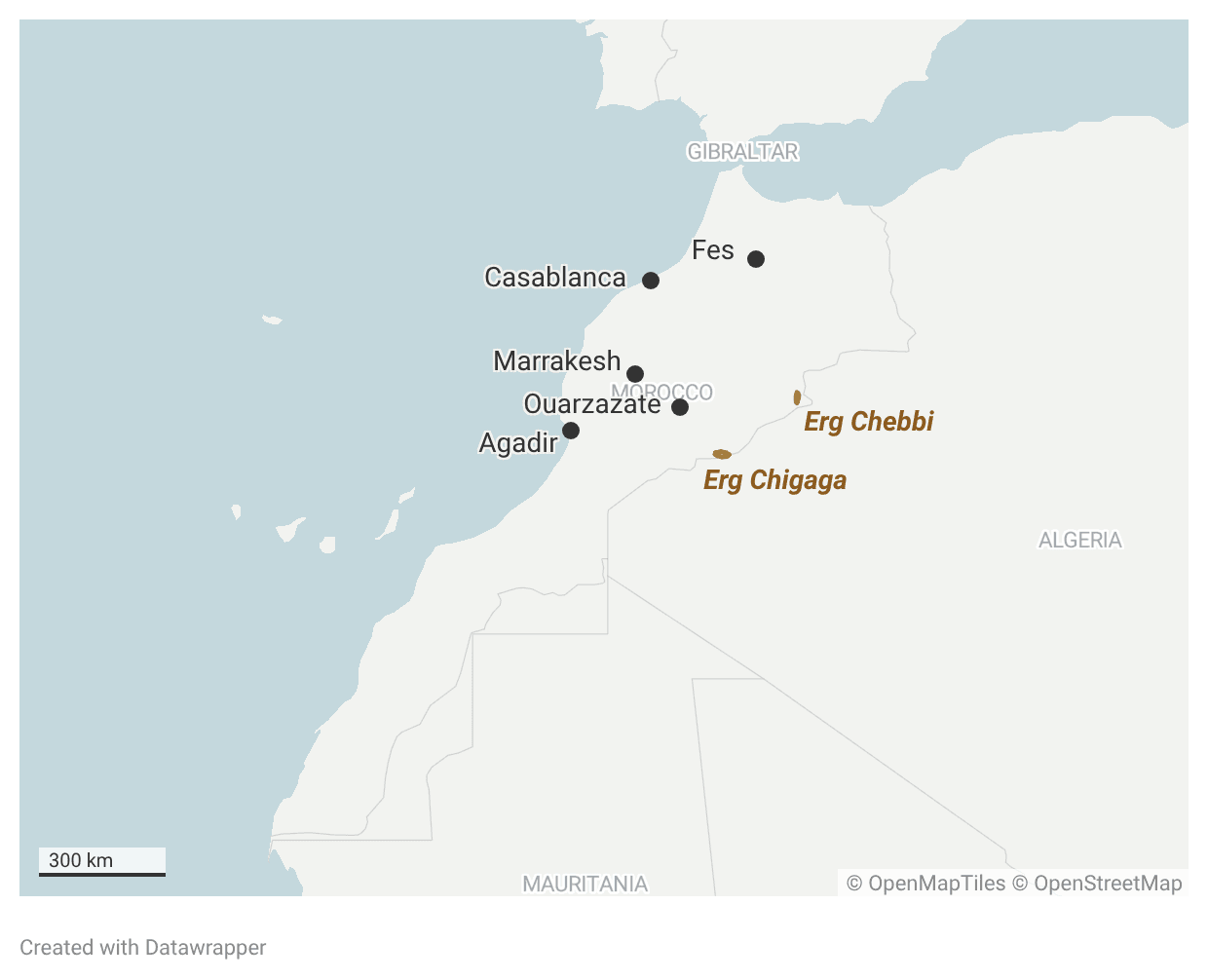
If you want the tall sand dunes you're imagining, Morocco essentially gives you two areas:
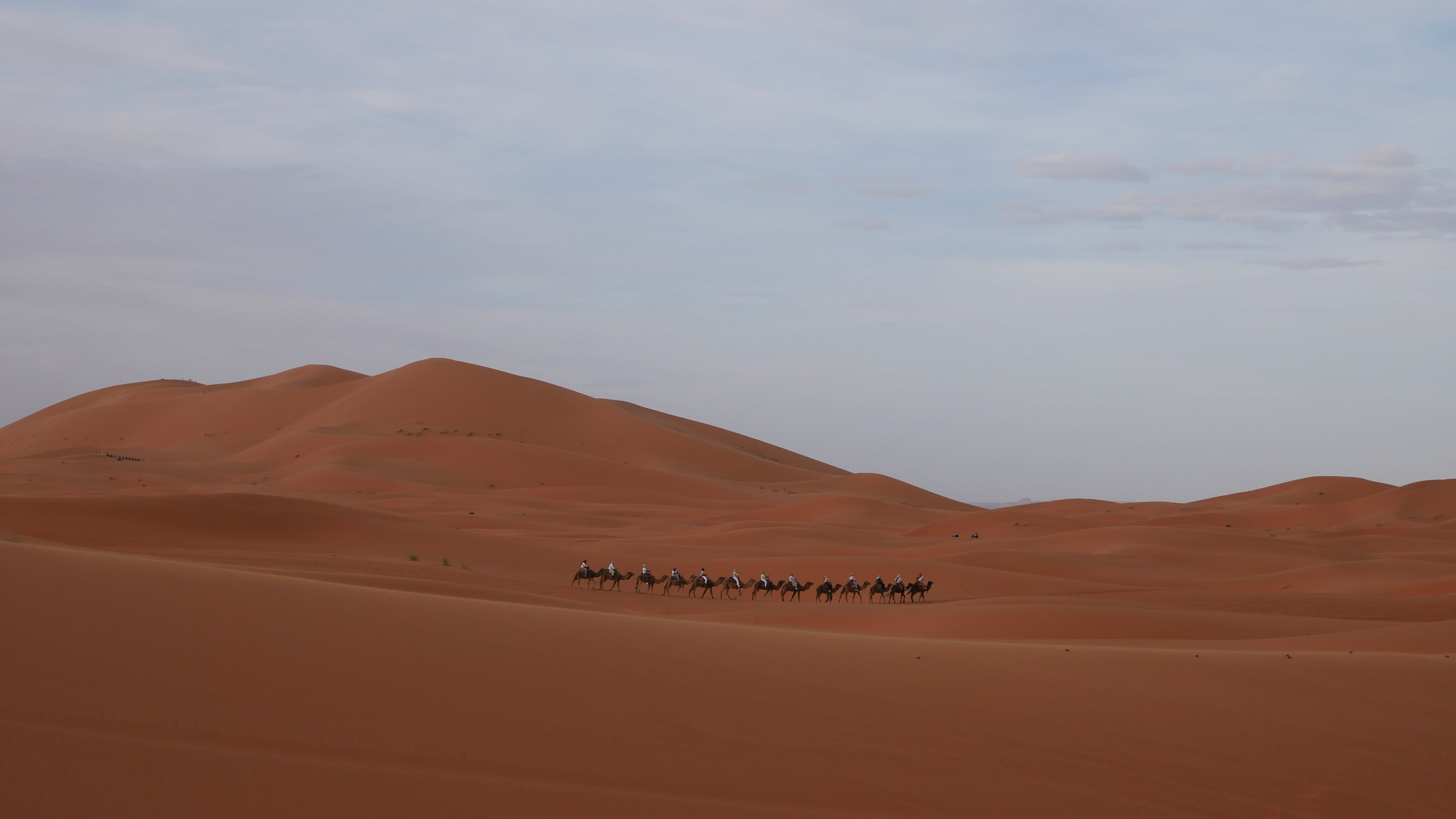
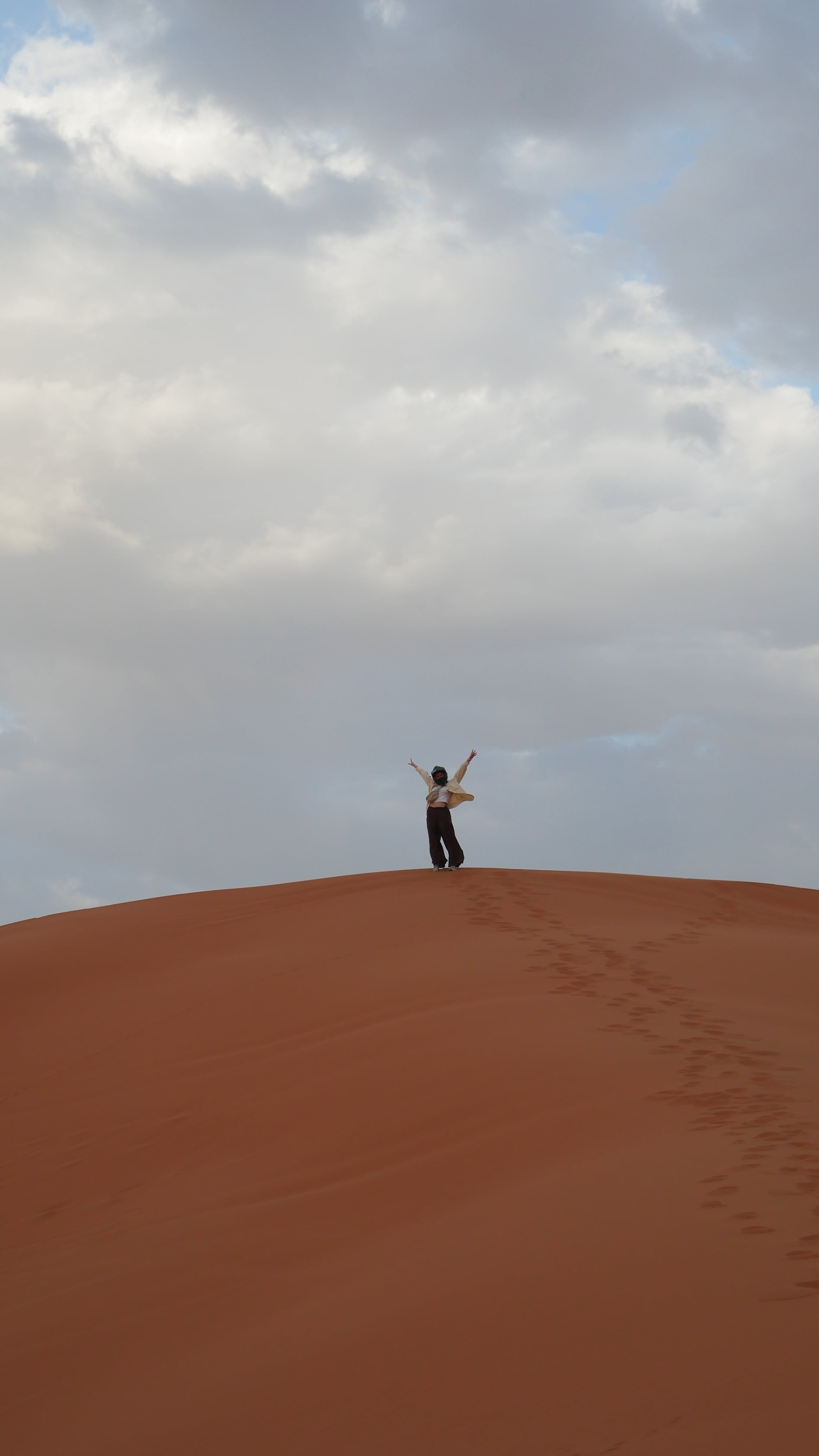
- Erg Chebbi — the best-known one, widely considered the most beautiful, and the most commercial. The dunes rise up to 150 meters above the surrounding rocky plain, and the whole sand sea is about 28 km long and 5–7 km wide.
- Erg Chigaga — actually the largest erg in Morocco, roughly 56 km southwest of the village of M'Hamid. It's usually reached by 4x4 over unpaved track, which is exactly why far fewer people make it there and why it feels much less touristy.
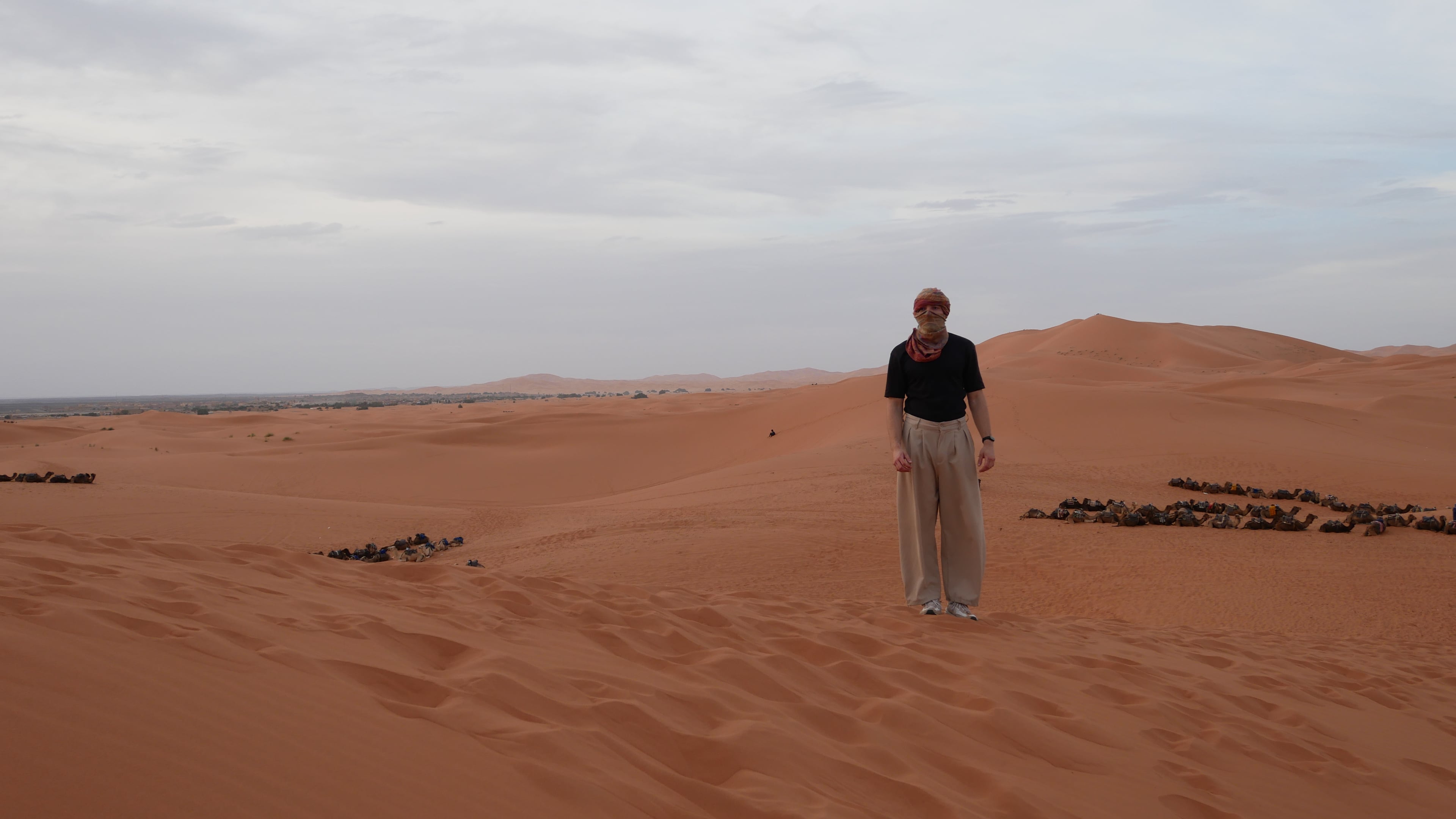
I went to Erg Chebbi, so that's what I'll be talking about from here on, and that's where the photos come from.
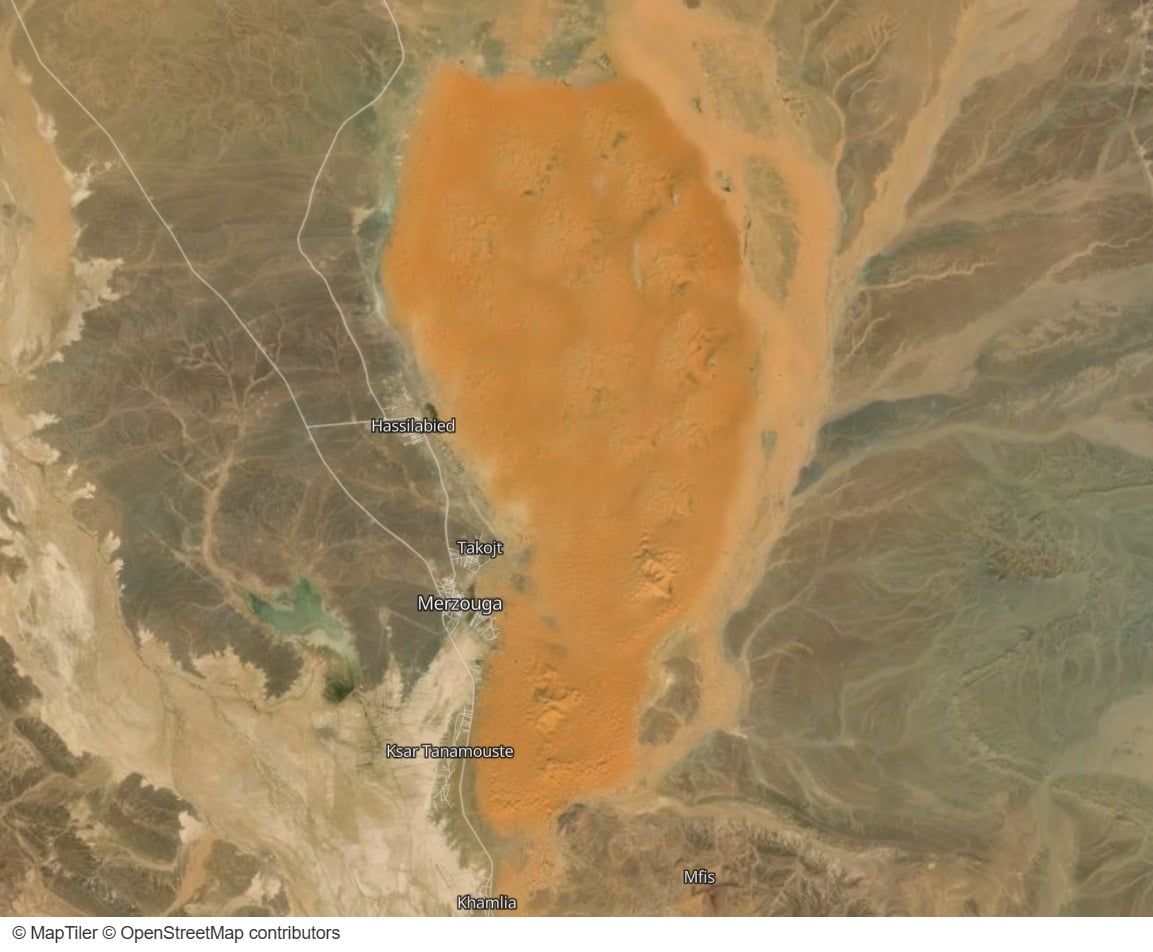
It's fascinating that when you look at a satellite image, you realize these sand seas have clear edges — some of them literally start on the other side of the road. That answers the question I couldn't find an answer to before I arrived: how do you even get to the dunes? Simple. A road runs right up to them. There are a few settlements there, you park your car, and the sand starts right behind the road.
It's also worth realizing that Morocco is a fairly big country, and these areas sit almost at its eastern border, while most of the cities lie on the western coast. Getting from Marrakesh to Merzouga, the village at the edge of Erg Chebbi, means about 530 km and nine hours of driving.
Your options for a Sahara trip
There are two basic ways to see the dunes: rent a car, book your own accommodation and do the whole thing yourself, or buy a guided tour. One thing is important either way — if you want to visit these areas, it's really worth having at least 3 days. Let me give you my verdict first, and then go through both options in detail.
Guided tour vs. renting a car — TL;DR
For travelers who like doing things on their own and have more than 3 days, I'd recommend renting a car. It lets you see more stops along the way and spend as long as you like at each one. You'll also be able to stay more than a single night in the desert.
For someone who only has 3 days, doesn't feel like spending that long behind the wheel, or simply doesn't want to deal with logistics and would rather sit back and be taken along, a guided tour is a perfect match.
In the end, my group and I went with a guided tour — partly because of limited time, and partly because I couldn't answer questions like how we'd get to the desert camp or arrange a camel ride. Now that I've been, those mechanics are clear to me, and I'll describe them below.
The guided tour
I've had very good experiences booking guided tours through GetYourGuide, since they offer a wide choice and plenty of reviews to help you decide. Most tours on offer start and end in Marrakesh and last three days. I personally picked this one, but I found at least two others with an almost identical itinerary and similar ratings. Prices change dynamically, and GetYourGuide offers free cancellation on most tours, so don't hesitate to book early — if the price drops, cancel and book again.
Prices usually sit around 110€. From here on I'll be describing the specific tour I booked, though most offer the same thing — still, I'd recommend reading the descriptions of individual tours, as the details can differ.
The price included: transport by minivan, 2x breakfast, 2x dinner, 2x accommodation (one night in a hotel, one in a desert camp), the camel ride, stops along the way with local guides, and a driver who doubles as a guide.
That strikes me as exceptional value, especially given that the hotel we slept in on the first night was nice and even had a pool, and both breakfasts and dinners were buffets where everyone ate their fill.
Anyone who has done a tour like this before knows their business model usually isn't only the price of the tour itself. On this one too, we were taken several times to places where the company evidently has some margin arranged — a turban shop, a carpet shop. These stops always come with an interesting talk, about the history of carpets for example, followed by an offer to buy something. My experience is that if the tour is a good one (which the reviews usually capture), you're never pushed into these purchases and never put in an uncomfortable situation — and that's exactly how it went here. Our driver was very accommodating, and when we stopped for lunch at restaurants where prices were often unnaturally high, he let us go and eat somewhere else.
How the tour goes
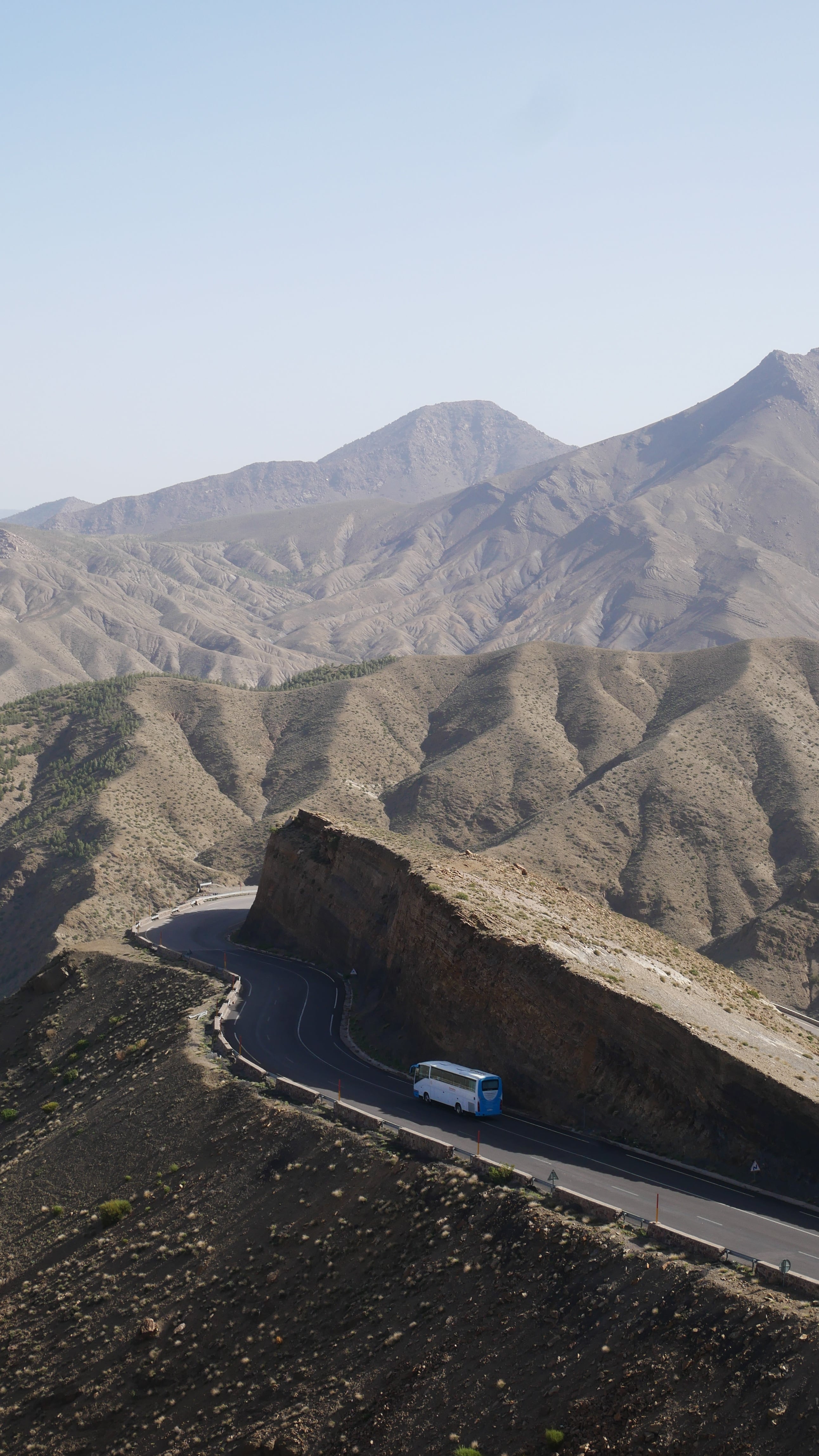
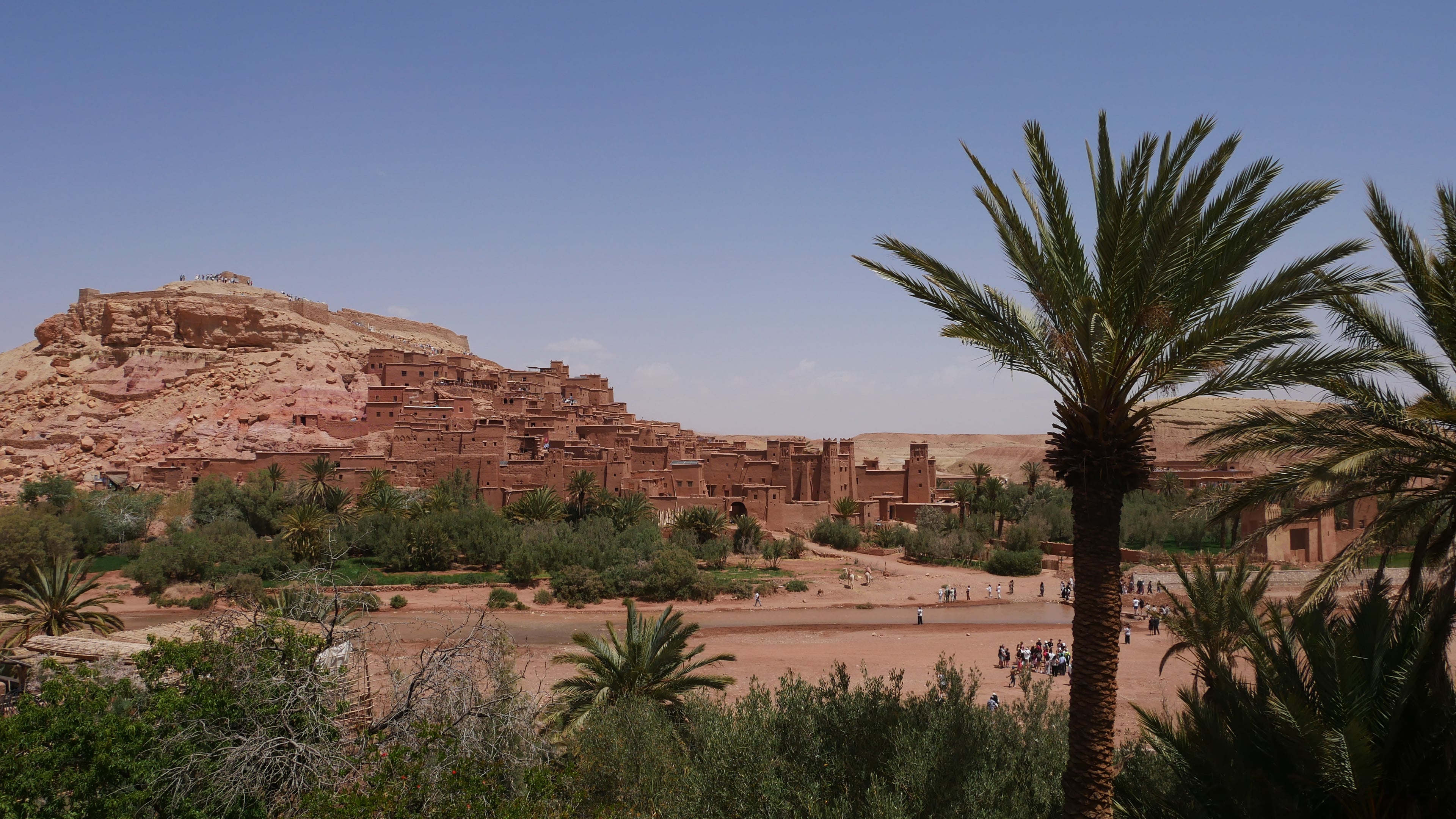
Day one leaves Marrakesh and makes several stops through the day, where you often get talks about the local culture. You stop at a pass in the Atlas Mountains, at the Dades Gorge, at the Ouarzazate oasis, and in Ait Ben Haddou, the town known as a film set for many movies. You spend the first night in a hotel, and around noon on day two you reach the dunes.
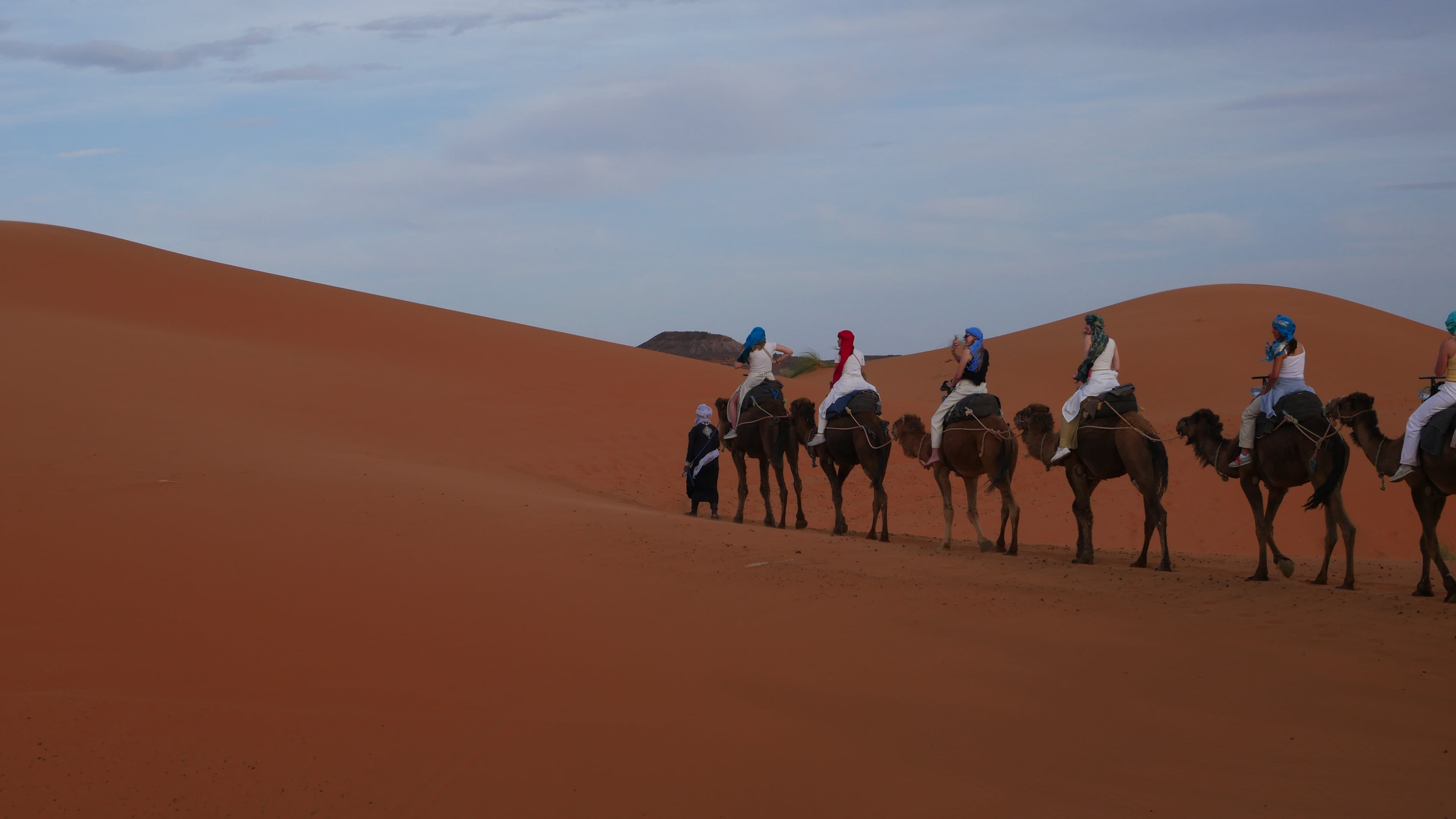
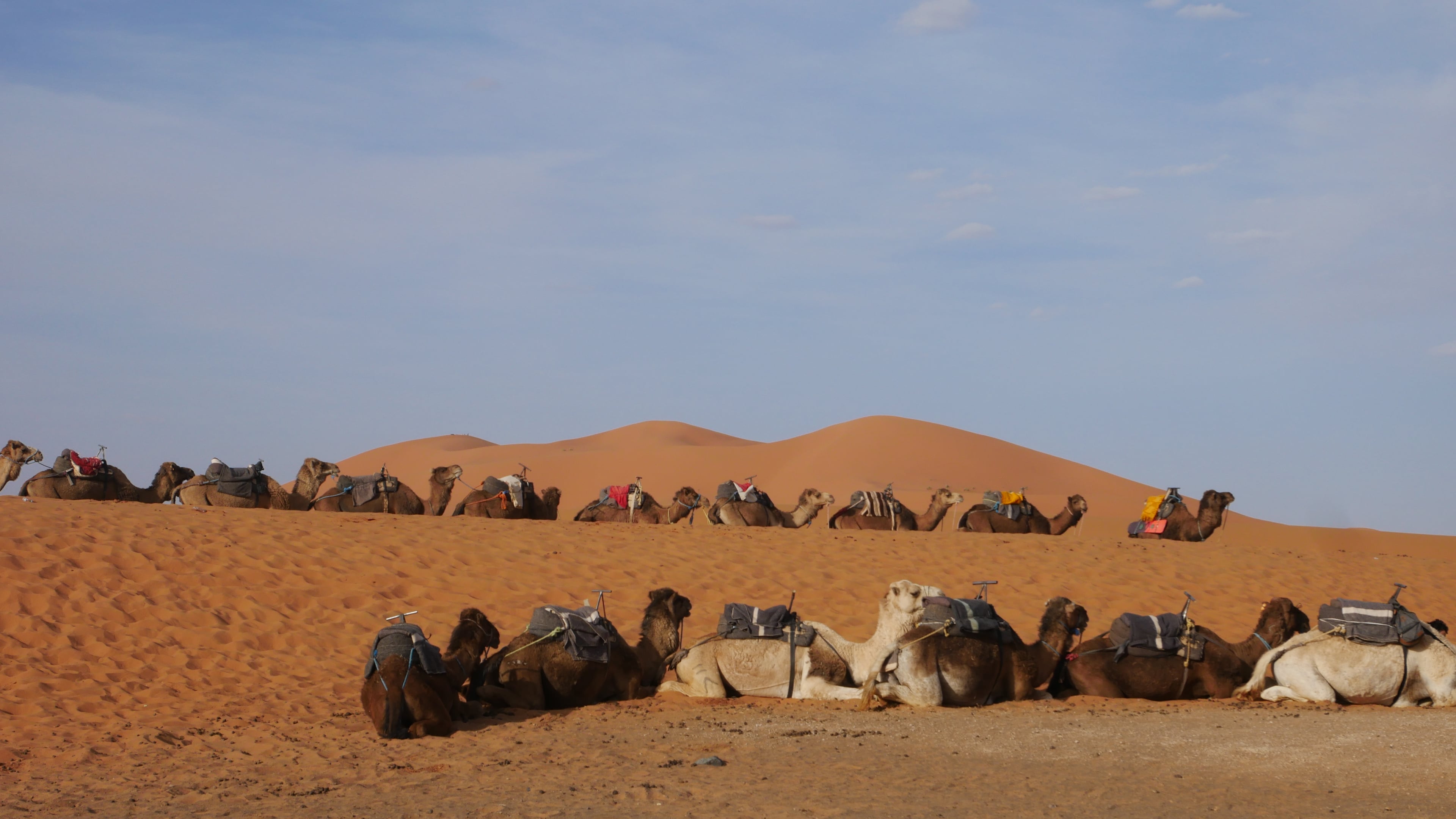
Your guide helps you put on a turban and takes your luggage to the camp, while you enjoy the camel ride and the sunset on the dunes. Then you arrive at the camp, where dinner and the tents are waiting — essentially large rooms with electricity, except the walls are made of heavy fabric. In the evening there are Berber dances around a fire, and in the morning you're up for sunrise.
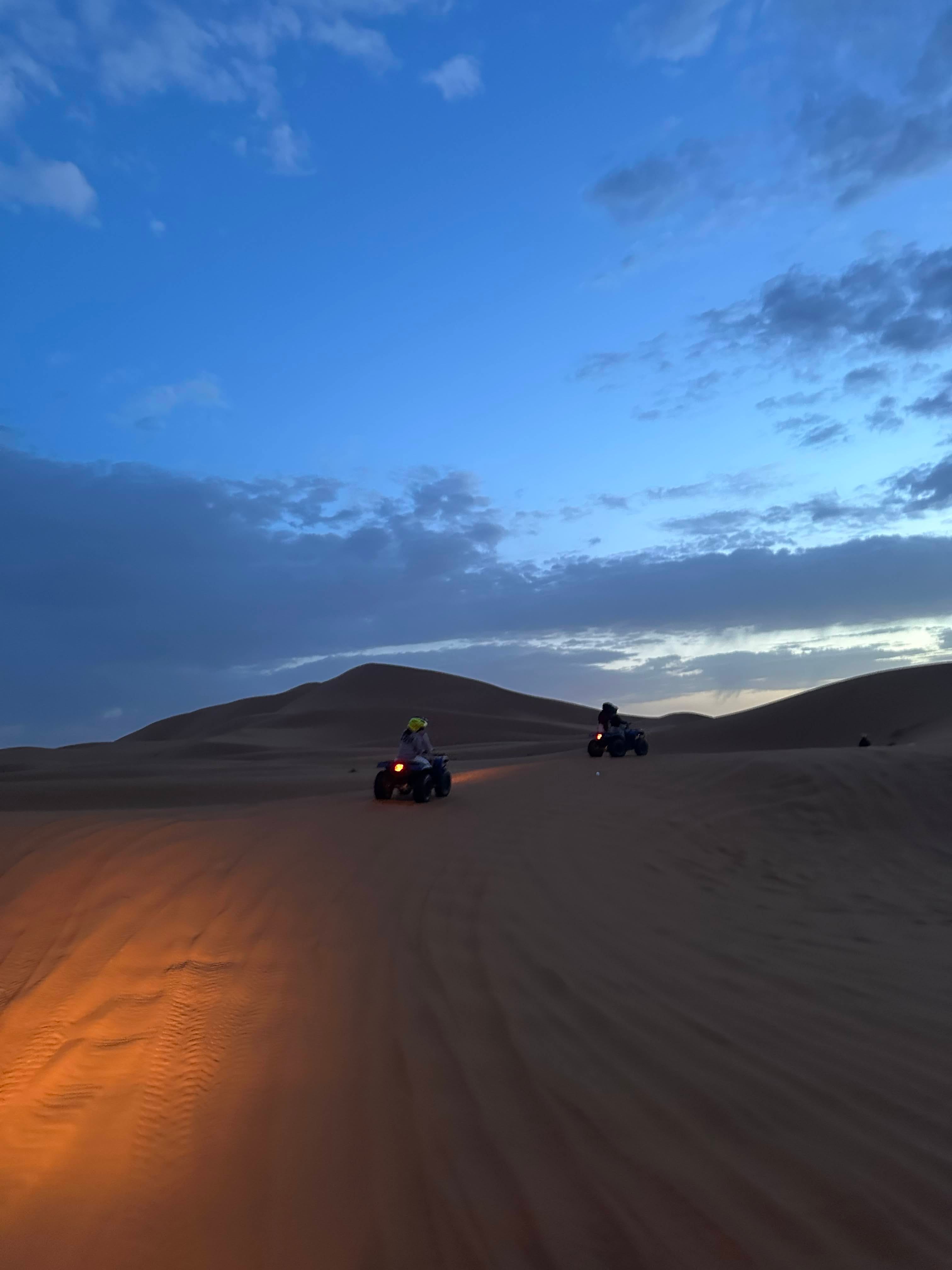
You can either ride back on the camels or pay around 50€ extra (for two people) for a quad bike ride. That's not a small amount, but our group decided to go for it and for me it was absolutely worth it — riding along in single file might not sound all that thrilling, but more than an hour out on the dunes was what many of us called the highlight of the trip. After that you get back to the van, and essentially spend the whole third day traveling back to Marrakesh.
My overall verdict on the guided tour
Overall I rate the experience positively: the price is excellent, the driver was helpful and kind, and we traveled in a comfortable Mercedes minivan. The presentation of local culture at those checkpoints was slightly spoiled for me by the ending, where someone was always trying to sell us something, but that clearly comes with the territory. The guides at the Ouarzazate oasis and in Ait Ben Haddou didn't strike me as all that interesting either, and I'd have preferred to enjoy those places at my own pace — though I was still glad I got to see them. The food at breakfast and dinner was excellent in my book, even if after two days some people might find it repetitive.
You also need to be aware that over those three days you'll spend more than 16 hours in a car, which is pretty exhausting. But you'll see what you came for: beautiful sand dunes and caravans of camels.
The alternative: renting a car
As I mentioned, the alternative is renting a car. I did quite a lot of research while weighing this option, and here's what I found. People often associate Morocco with Africa and picture underdeveloped infrastructure. It's worth realizing that Morocco has been a stable country for many years, is relatively wealthy for its region, and could comfortably be compared with European countries. The roads are in good condition most of the time, and once you get out of Marrakesh you're driving on roads with light traffic where people don't drive aggressively (which cannot be said about Marrakesh itself).
What you do need to watch out for is the speed limits. There are very frequent police checkpoints along the way, and local police are said to enjoy pulling over tourists in particular, so any speeding or an unfastened seatbelt can very quickly turn into a fine.
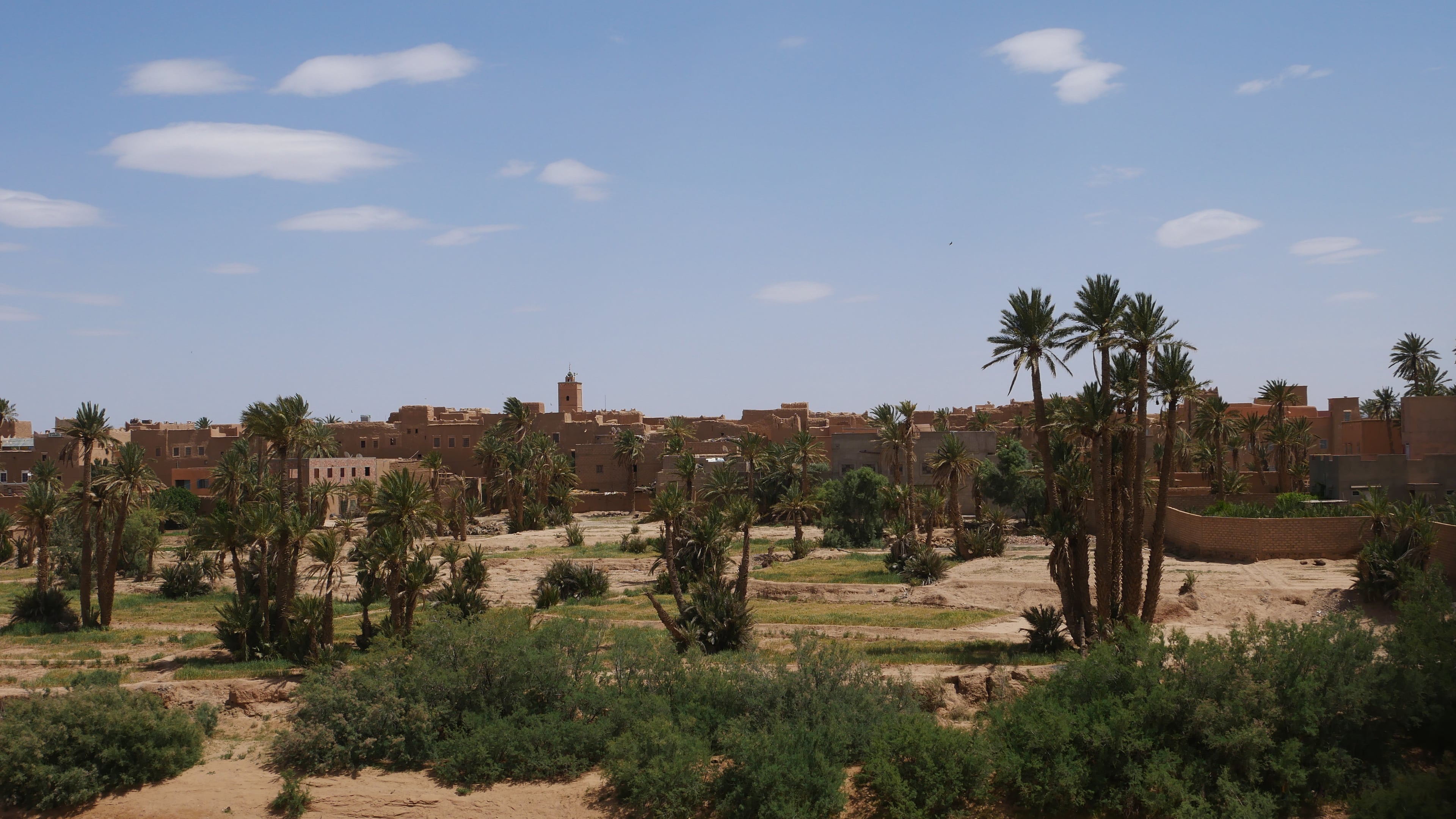
The main advantage of a car over a guided tour is that you can make the stops on your own terms and explore them at your own pace — the Ouarzazate oasis, for instance, struck me as a beautiful place where our tour gave us no time to stop at all.
How to do the desert camp and ride the camels on your own
That brings us to the question of how to experience a desert camp and a camel ride if you drive yourself. Open Booking and search for the Erg Chebbi area or the village of Merzouga, and you'll find plenty of options. Many of them look very tempting: great prices, often with breakfast and dinner served right in the middle of the desert. A big advantage of having your own car is that you can book a camp like this for more than one night and spend longer in the desert.
So how do you get to the camp? The camp sends you the address of a property by the road where you can safely park your car. From there they'll offer you (usually for an extra fee) a lift by Jeep, or exactly the camel tour you were after.
Most camps are less than an hour's walk from the parking area. So if you don't happen to want the camel experience, or you avoid it for ethical reasons, you can simply walk there (you can either have your luggage taken by Jeep, or carry it yourself and leave anything you don't need in the car). If you go for one of these places, your accommodation should give you more specific information — I just wanted to sketch out what it usually looks like.
Final thoughts
If you decide to go to Morocco to experience the desert, you'll experience a lot more than that. Morocco is an amazing country with a rich history, and I'd bet that alongside the desert you'll leave yourself time to explore the busy streets of Marrakesh or a traditional Hammam bath — for me another highlight of the trip, and I highly recommend Hammam Nilo right in Marrakesh. Whichever option you pick, I hope I brought a little inspiration and helped you to answer your questions.