Bratislava definitely isn't the most famous city in Central Europe, but recent routes added by Ryanair and Wizz Air have put it on the map for travelers, with return tickets starting as low as 30€. Whether that or another reason inspired you to visit—or if you're just considering it—let me, a local who was born and raised here, show you what's truly worth seeing. I'll share my insider tips and even more reasons why you should choose Bratislava as your next destination!
Is Bratislava worth visiting?
Bratislava is quite a small city compared to other European metropolises, but a stop here is definitely worth it. The city center is compact and walkable; you can visit the castle, get lost in the medieval streets, and try "halušky" (our traditional dish) and Kofola—a local drink quite similar to Coke.
Bratislava also boasts a great location, situated just 1 hour from Vienna (starting from 6€ by bus), 3.5 hours from Budapest (starting from 14€ by bus), and 4 hours from Prague (starting at 12€ by train).
This makes Bratislava a perfect starting point for visiting some of the most beautiful european cities and the central europe region. If you are already nearby, I always recommend stopping in Bratislava for at least one night before continuing your journey. It is also more affordable than Vienna or Prague, so spending a night here can help you save some money.
How many days to stay in Bratislava?
You could easily fill several days here, but you don't have to. Given the size and compactness of the city, one full day is enough for the main sights—or two if you want to work through more of the places on my list—and then off to Vienna or other beautiful cities nearby.
Top places to visit
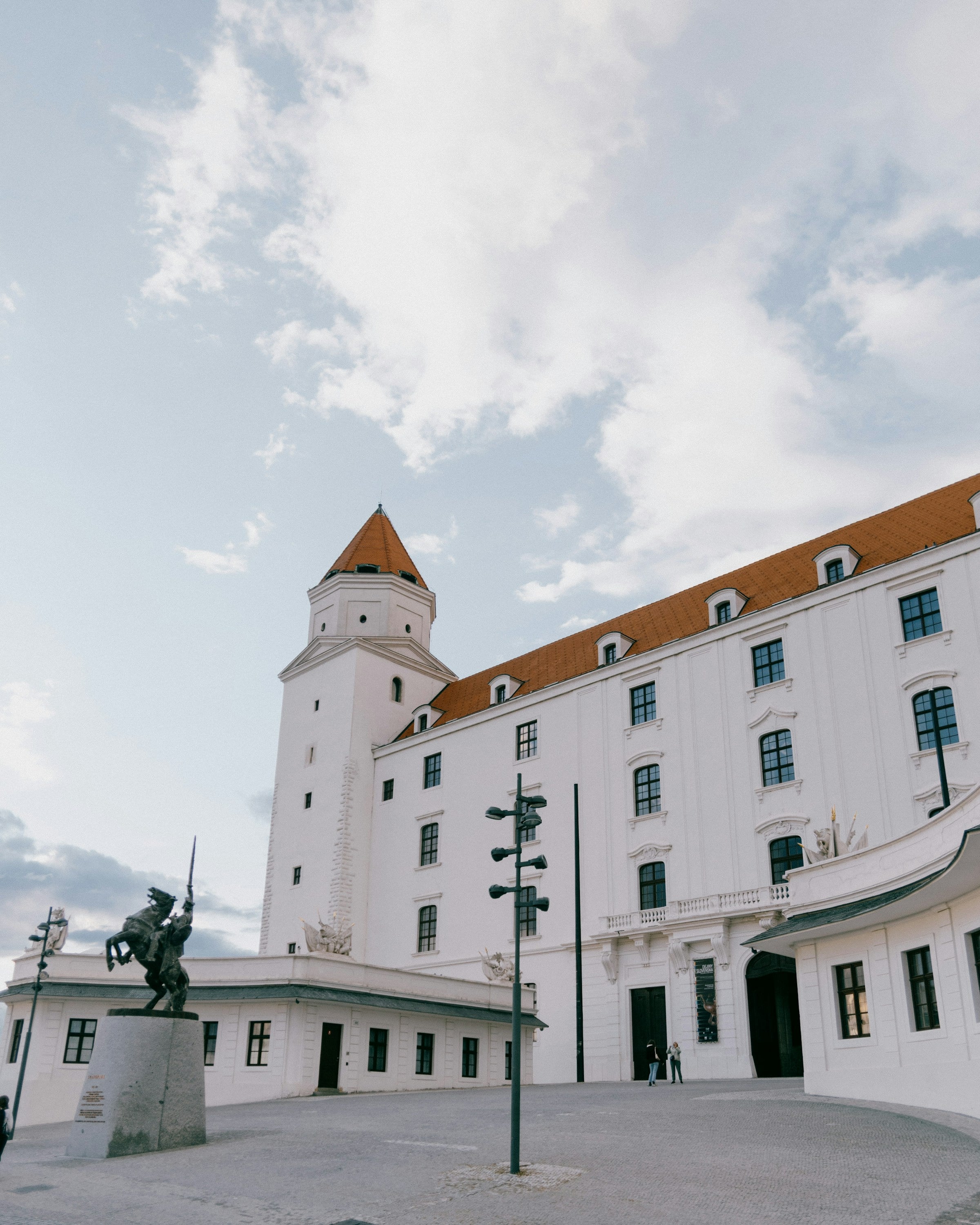
Bratislava Castle
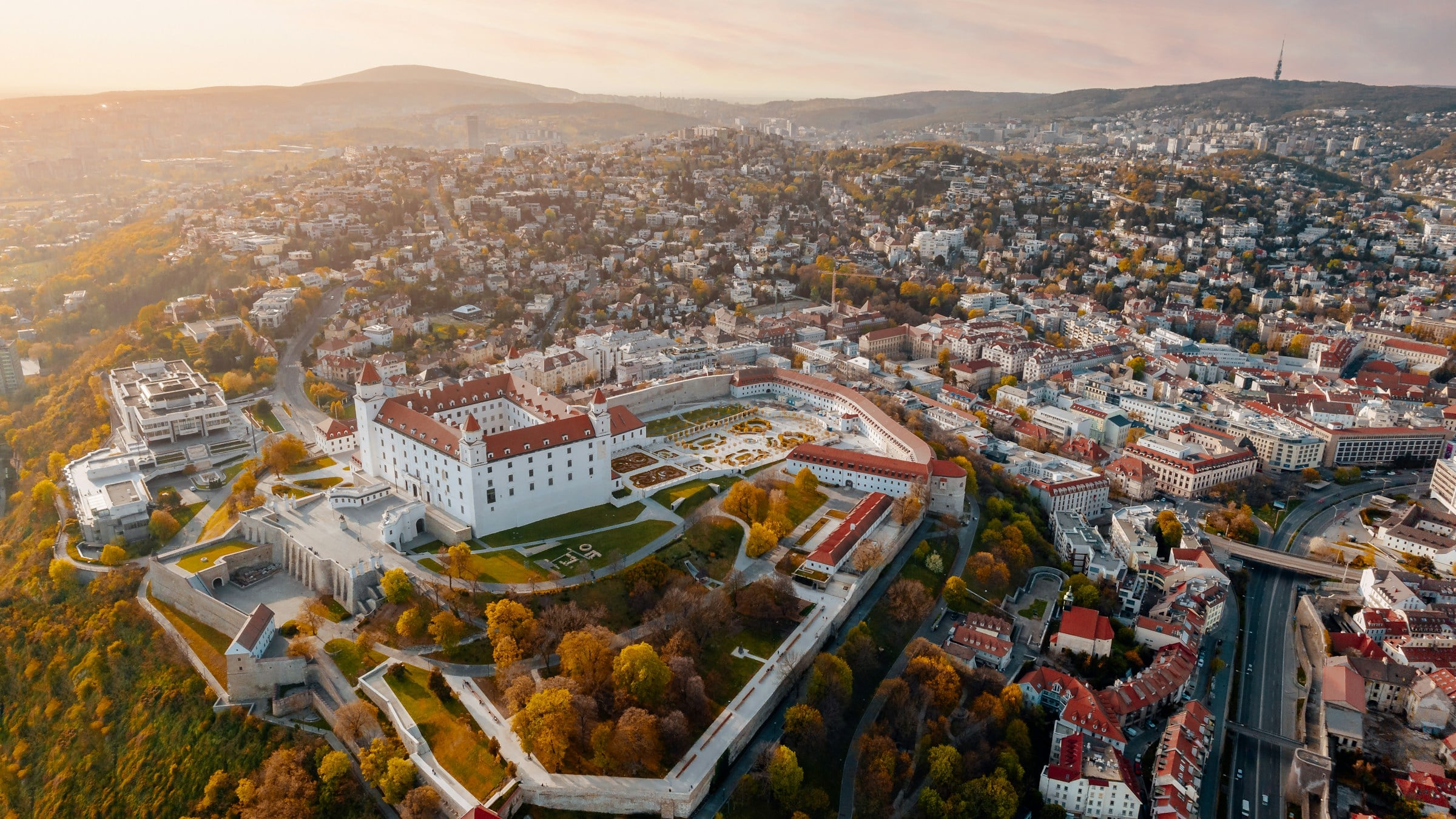
Bratislava Castle is the icon of the city and is definitely a place you cannot miss. You can reach it easily by walking from the city center or by taking a local bus—I recommend using Google Maps for the best routes. Behind the castle, you can find a beautiful, small Baroque Garden with free entry. It is typically open between 9:00 and 16:00.
From the castle, you can also reach one of the best viewpoints in the city located here.
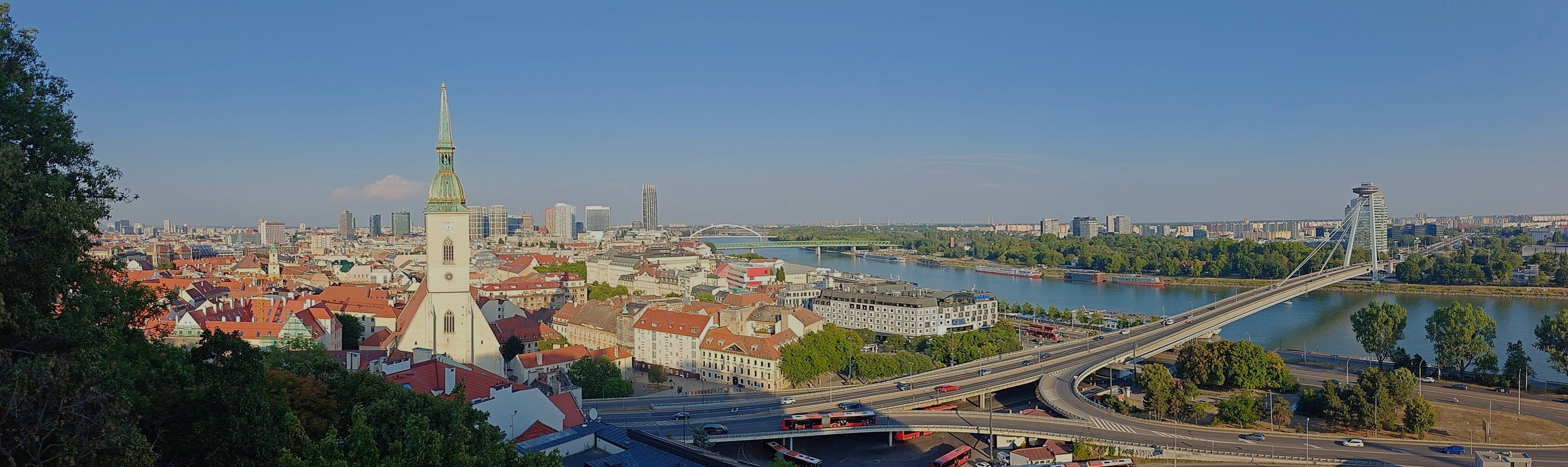
Standing here, you can witness a truly unique contrast. Right in front of you lie the traditional red-tiled roofs of the Old Town. Just behind them, you can see the glass skyscrapers of the modern downtown, and across the river, the landscape changes again to Petržalka. Known for its "paneláky" (concrete panel houses), this district is a legacy of the communist era and remains the most densely populated residential district in Central Europe.
Old Town
Bratislava's Old Town may be small, but it certainly has its own unique charm. The entire area is very walkable, and you can easily explore it all in a single day. While the best way to experience it is simply getting lost in its narrow streets, here are a few spots I would definitely recommend.
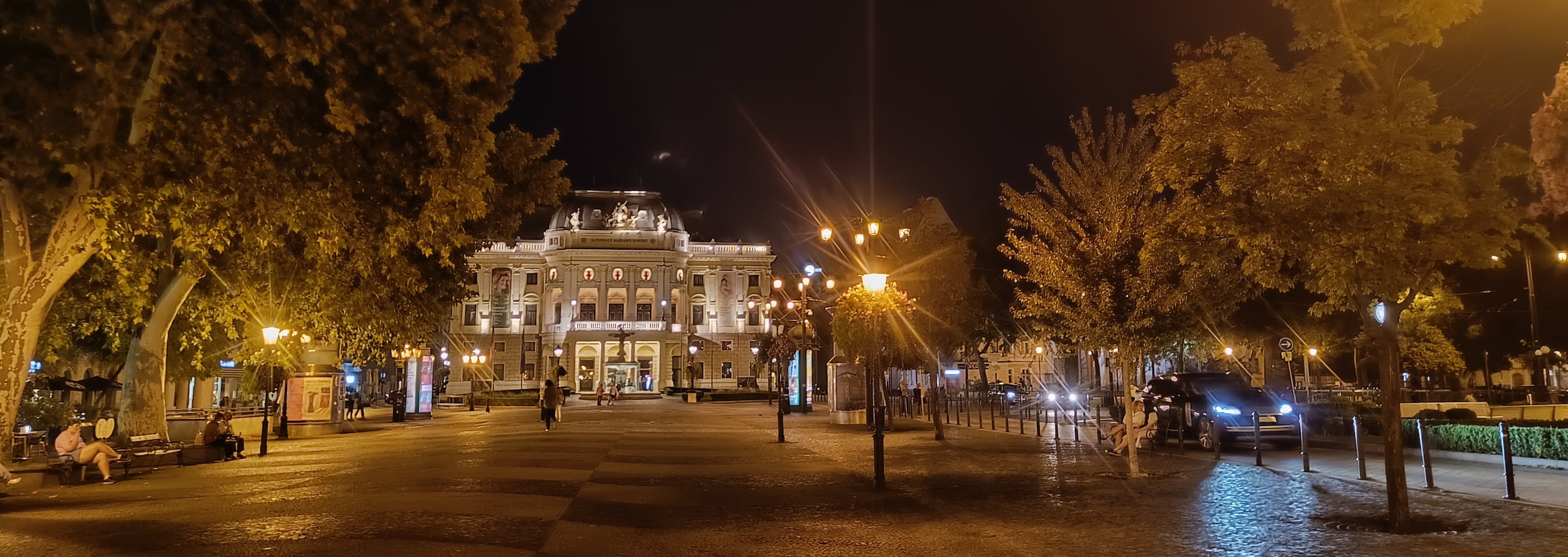
Hviezdoslav Square and the Old National Theater
This square, named after Pavol Országh Hviezdoslav, one of the greatest Slovak poets, offers a great view of a truly stunning building: the Old National Theater. During the winter, you can experience the Christmas markets here and fully immerse yourself in the festive atmosphere. To the right of the theater, across the tram tracks, you will notice the Reduta building. It is the home of the Slovak Philharmonic and, in my opinion, one of the most beautiful buildings in Bratislava.
Main Square, especially during Christmas
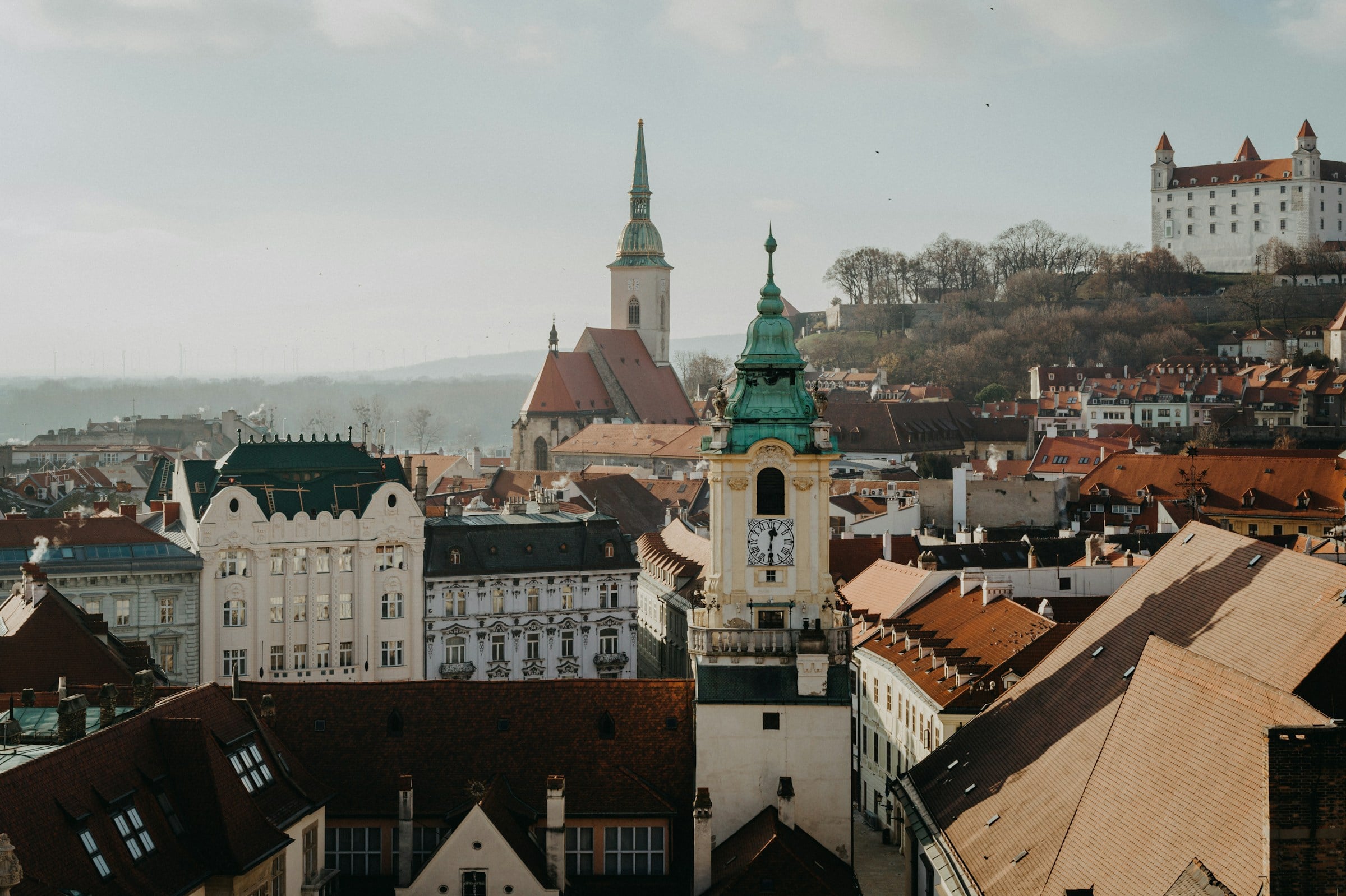
The Main Square (Hlavné námestie) is the heart of the Old Town. It is surrounded by colorful historical buildings and the Old Town Hall, which is the oldest city hall in the country. While it is beautiful year-round, it truly comes alive during December. In my opinion, Bratislava has some of the most charming Christmas markets in Europe. They are smaller and more intimate than the ones in Vienna, and you must try the "lokše" (salty or sweet potato pancakes) and some hot mead (medovina) while listening to local carols. It's the perfect place to feel the real spirit of the city.
Kapitulská Street — Step back into the Middle Ages
I have a bit of a personal connection to this street. When night falls and the old lanterns light up, walking through this quiet, empty street makes you feel as though you've stepped right into a legend from medieval times.
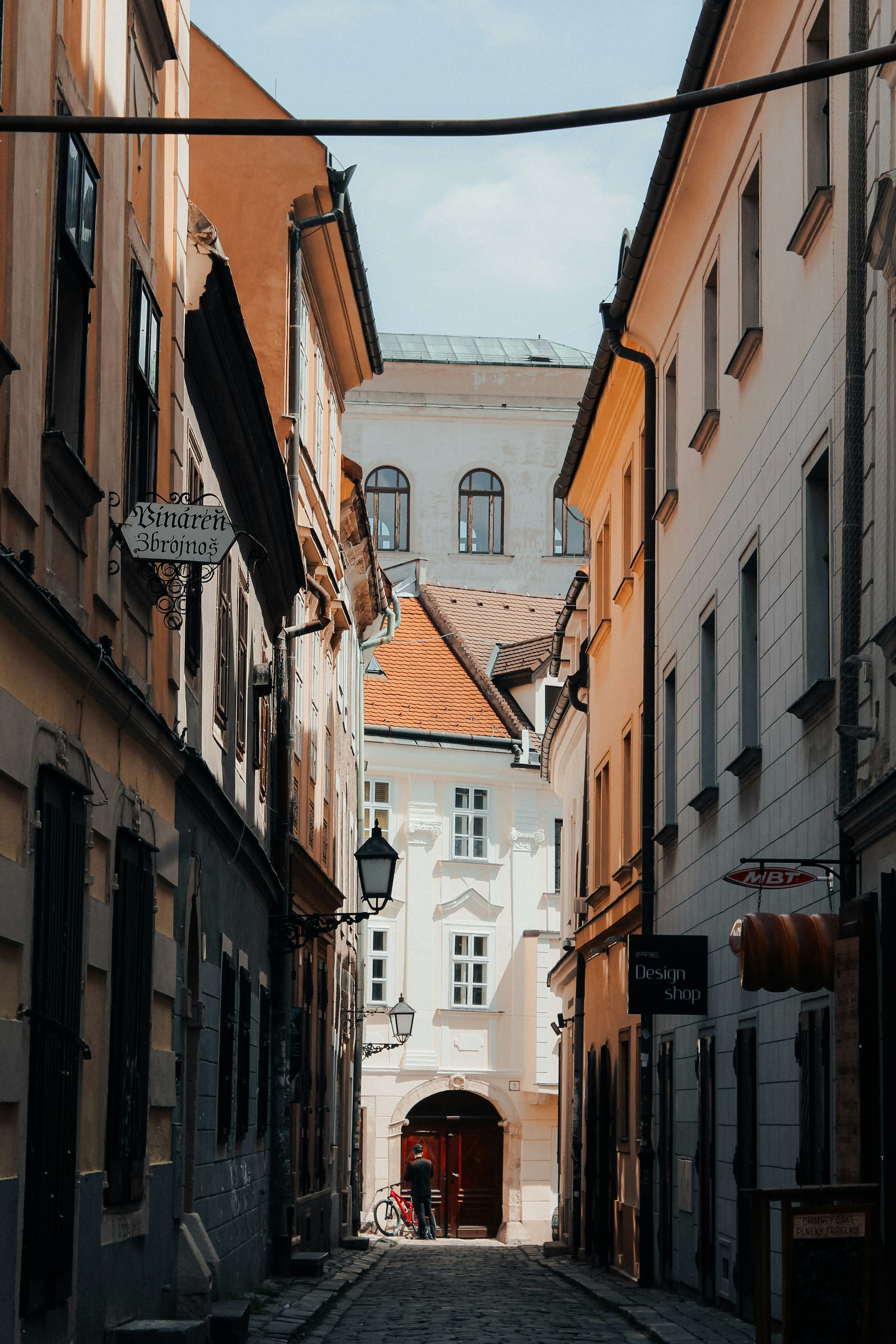
Kapucínska Street — One of the most beautiful views of the castle
Kapucínska Street offers one of the most beautiful views of Bratislava Castle, framed by a charming row of little old houses. On your right, you'll spot the Capuchin monastery, home to the Order of Friars Minor Capuchin, who first arrived in Bratislava back in 1676.
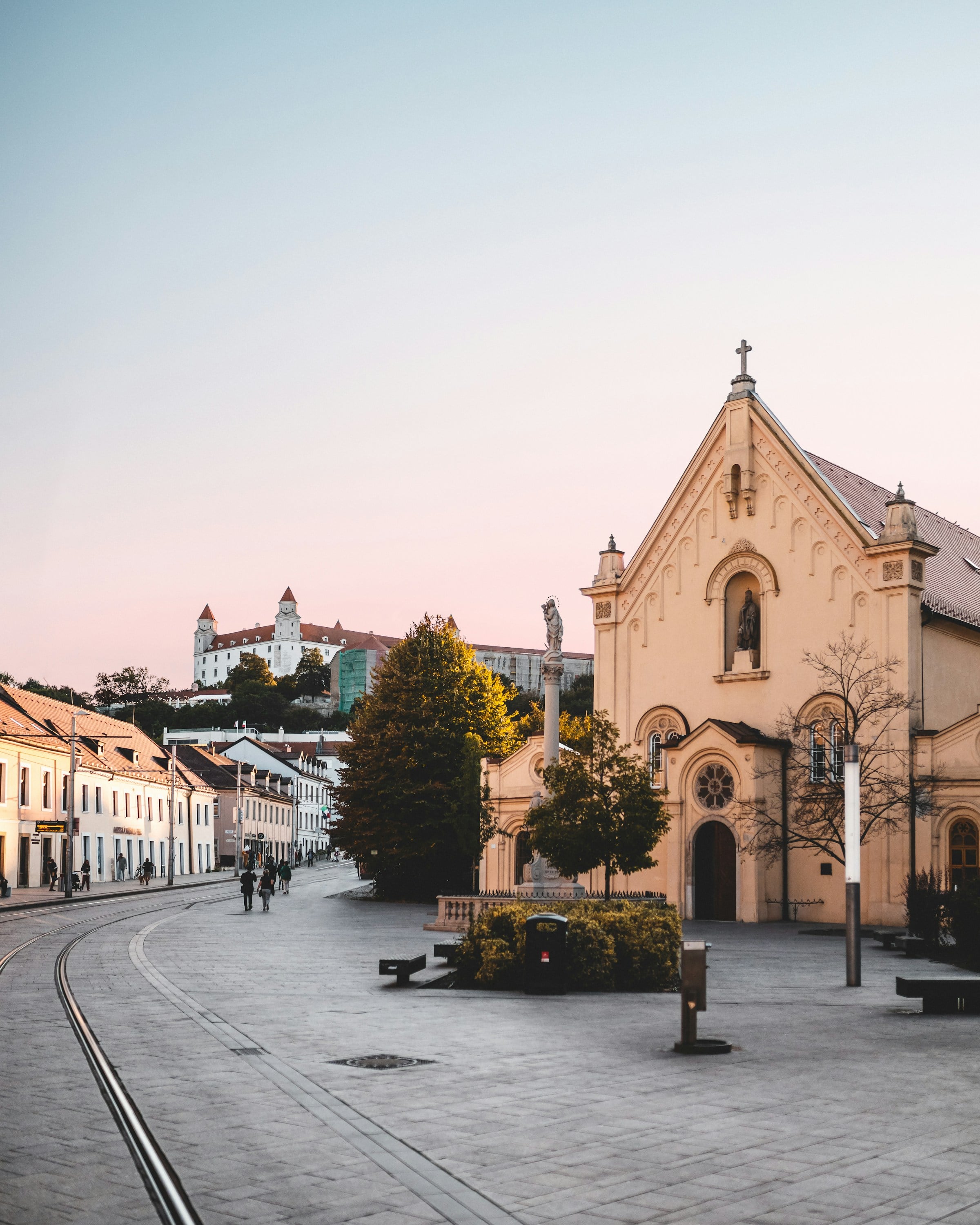
Michael's Gate (Michalská brána)
Michael's Gate was once part of the city's medieval fortifications, and the street running beneath it is considered one of Bratislava's most vibrant arteries. In the neighboring historical building—formerly the "U Červeného raka" pharmacy—you can purchase tickets to enjoy the view from the top of the tower, as well as the museum exhibition inside. Michael's Tower is open Tuesday to Sunday (closed on Mondays). A standard ticket costs 6€, while students and seniors pay only 4€—check the city museum's website for current opening hours.
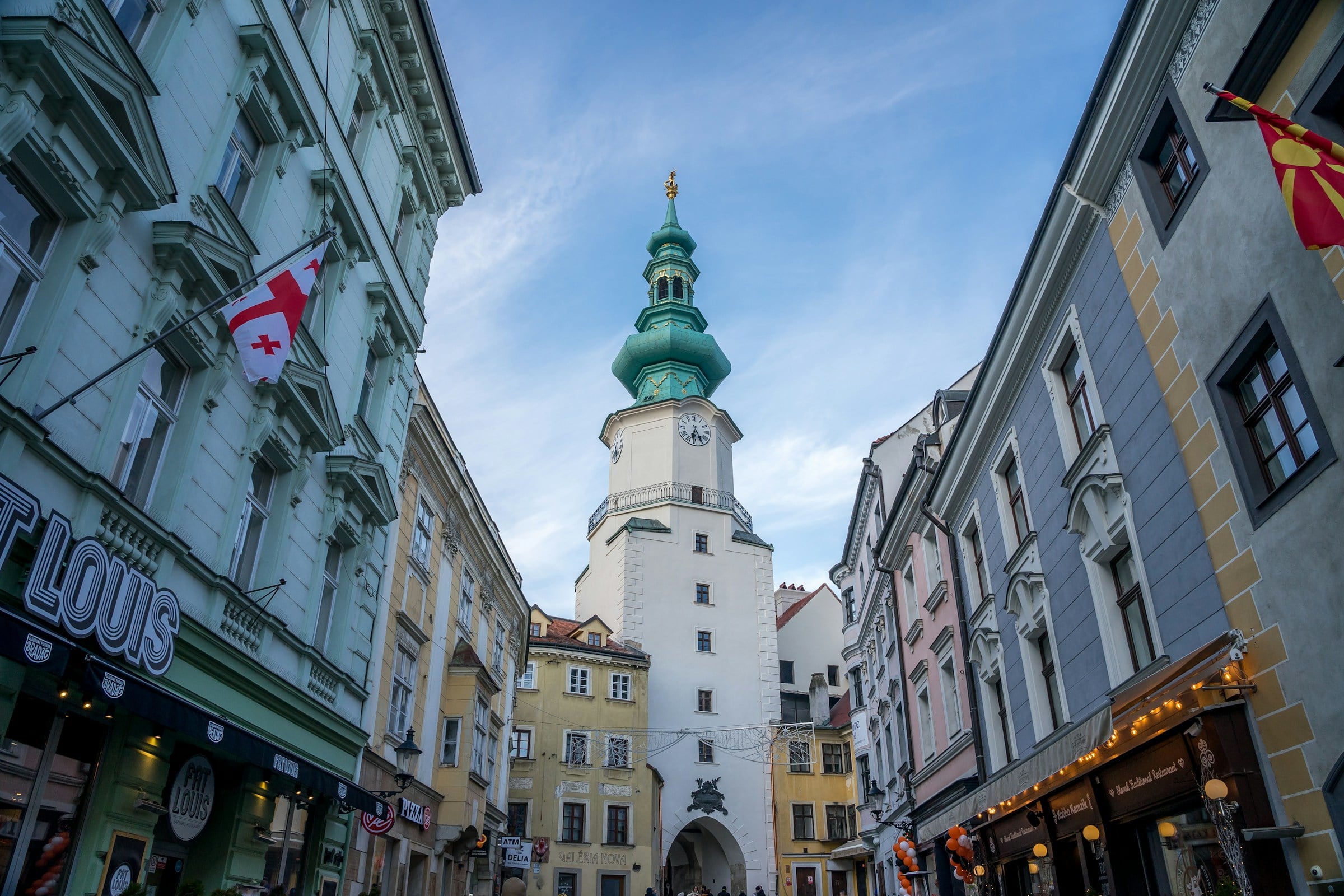
The Blue Church (Modrý kostolík)
The Blue Church originally served as a school chapel for the high school located right next door, both designed by the same architect. If the church is open, I highly recommend peeking inside, as the interior is also beautifully decorated in shades of blue.
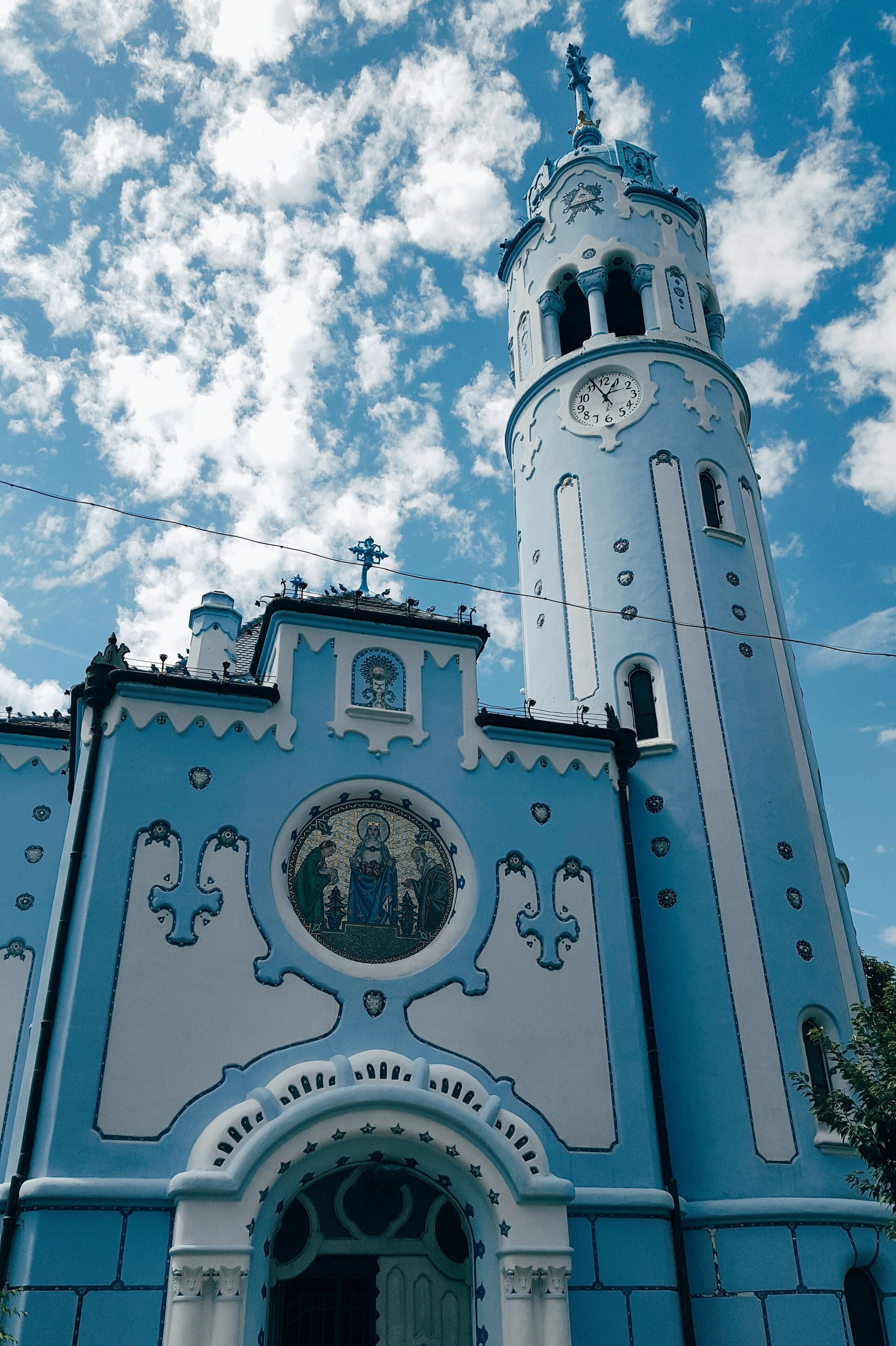
Slavín
This monument offers a unique 360° view of the entire city. It is a military cemetery where 6,845 Soviet soldiers, who fell during the liberation of Bratislava from Nazi Germany in 1945, are buried. At the top of the monument, you can see a statue of a soldier hoisting a flag and crushing a swastika. For many Slovaks, however, this site remains controversial due to the 40 years of Soviet dominance that followed the "liberation."
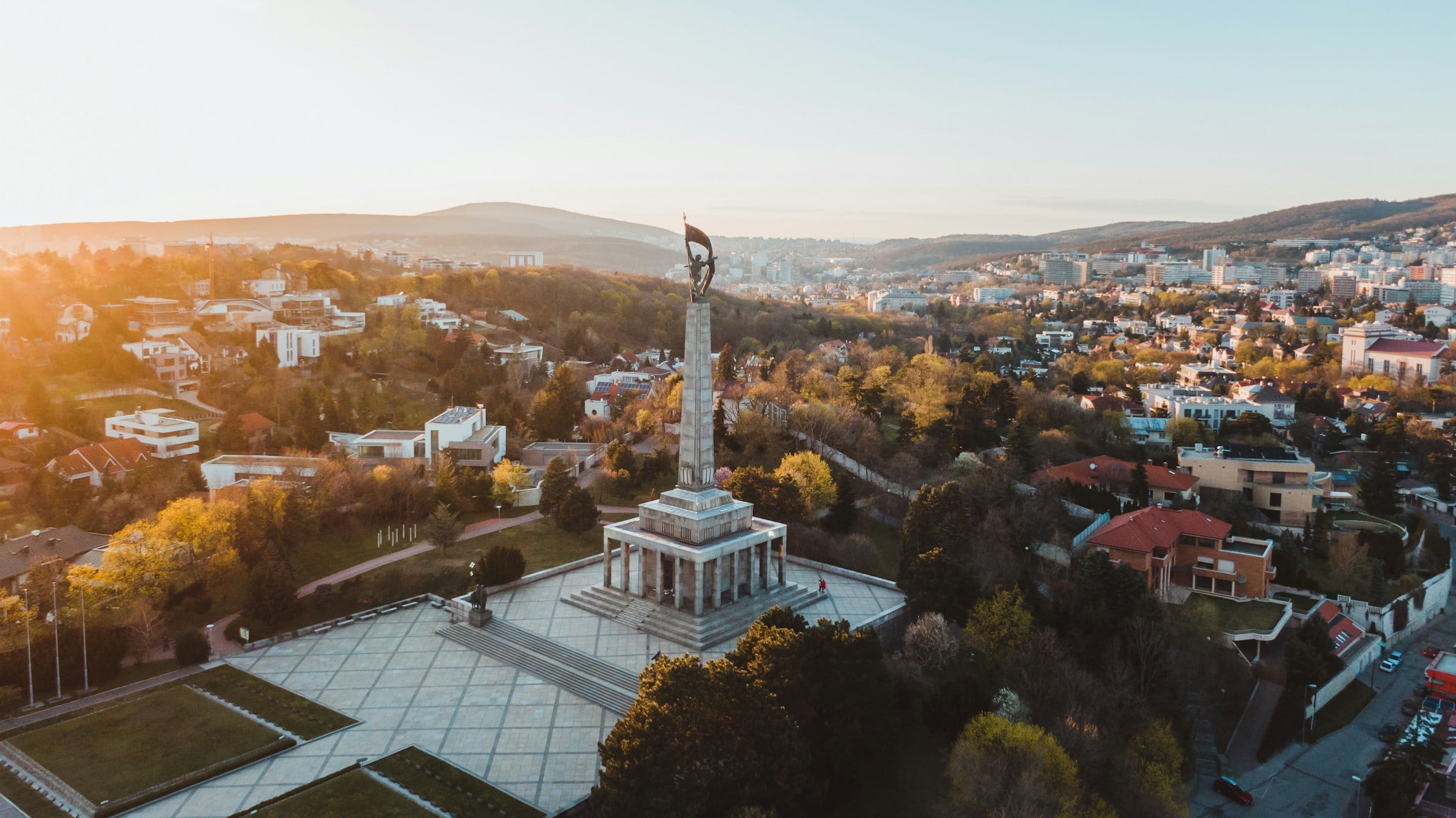
The area surrounding Slavín is now one of the most luxurious parts of Bratislava, a neighborhood filled with embassies and grand villas. You can get here by bus, car, or on foot—I recommend using Google Maps for the best route. Walking here is a lovely stroll, but be prepared for a steep climb, which is only natural given its hilltop location.
Nedbalka Gallery
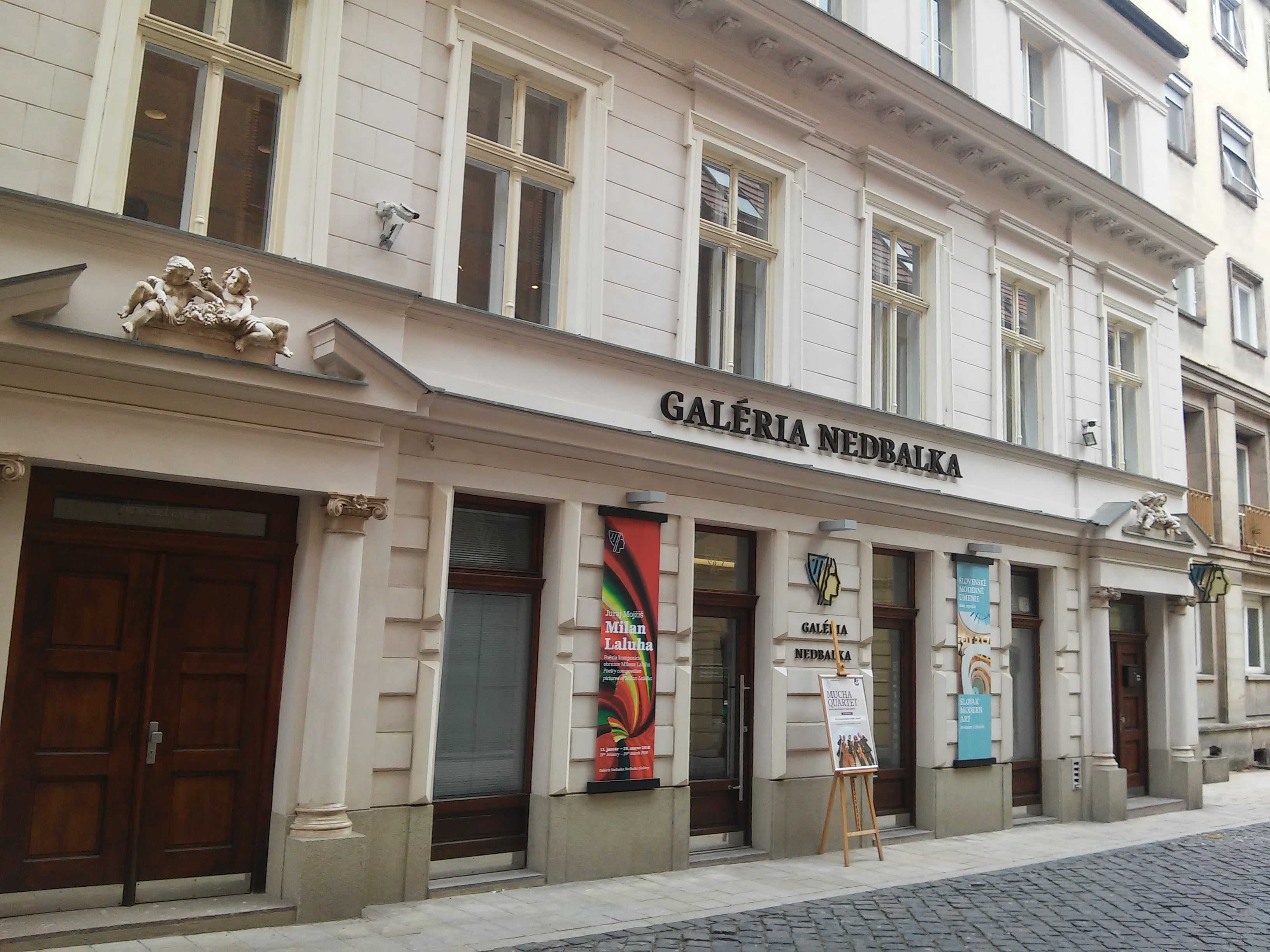
To soak up some culture and art, I highly recommend the Nedbalka Gallery in the city center. It is a smaller private gallery that presents the work of artists active in Slovakia since the 19th century. A basic ticket costs 8€ (4€ for students), and a coffee or tea at the gallery café is included in the price!
Catch a Sunset at the Old Bridge (Starý most)
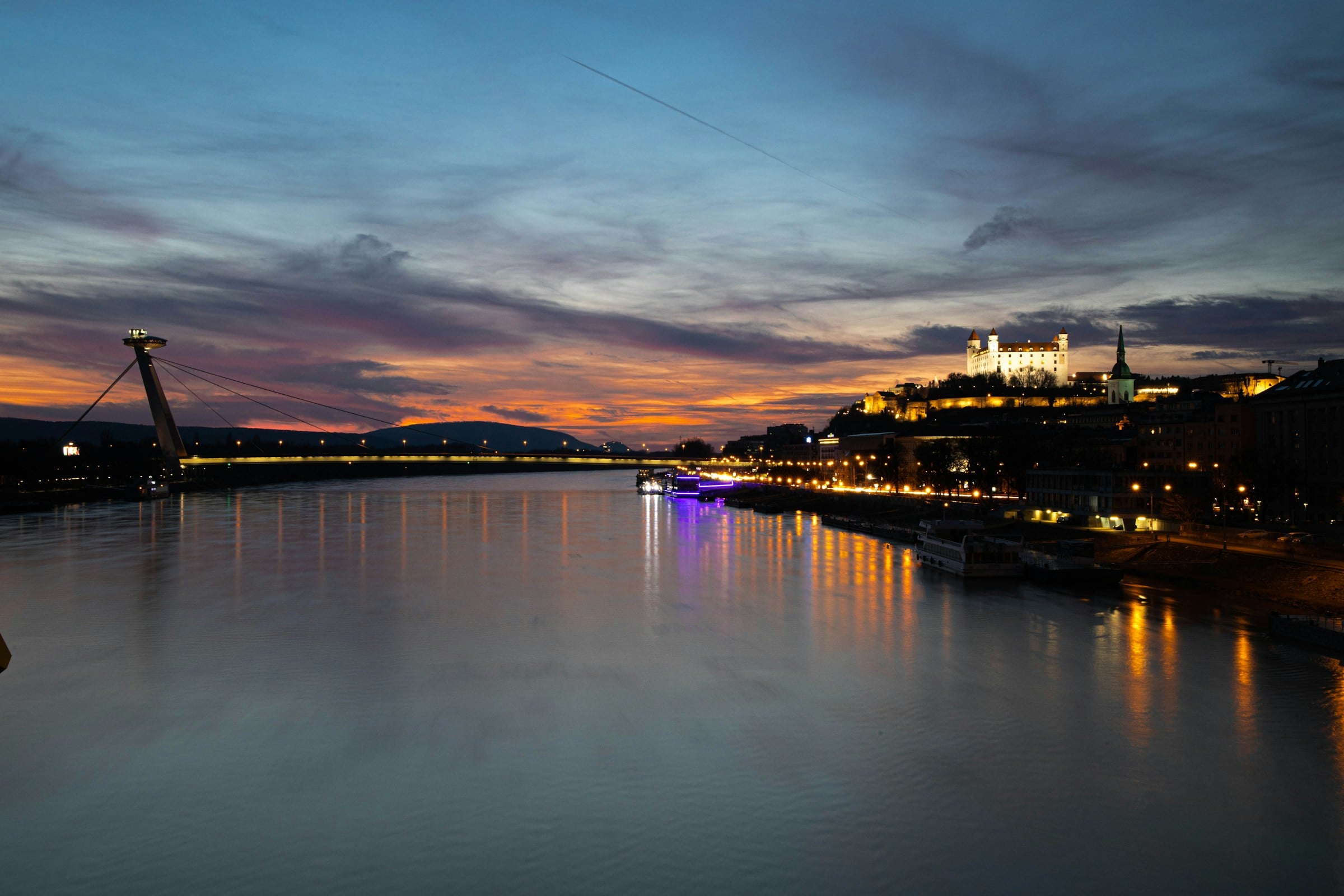
The Old Bridge is the oldest bridge in Bratislava. Since its renovation in 2016, it has served exclusively for trams, cyclists, and pedestrians. Especially during the warmer months, the bridge offers plenty of seating areas with a stunning view of Bratislava Castle and the setting sun. It is truly the perfect spot for a photo!
Tyršovo nábrežie
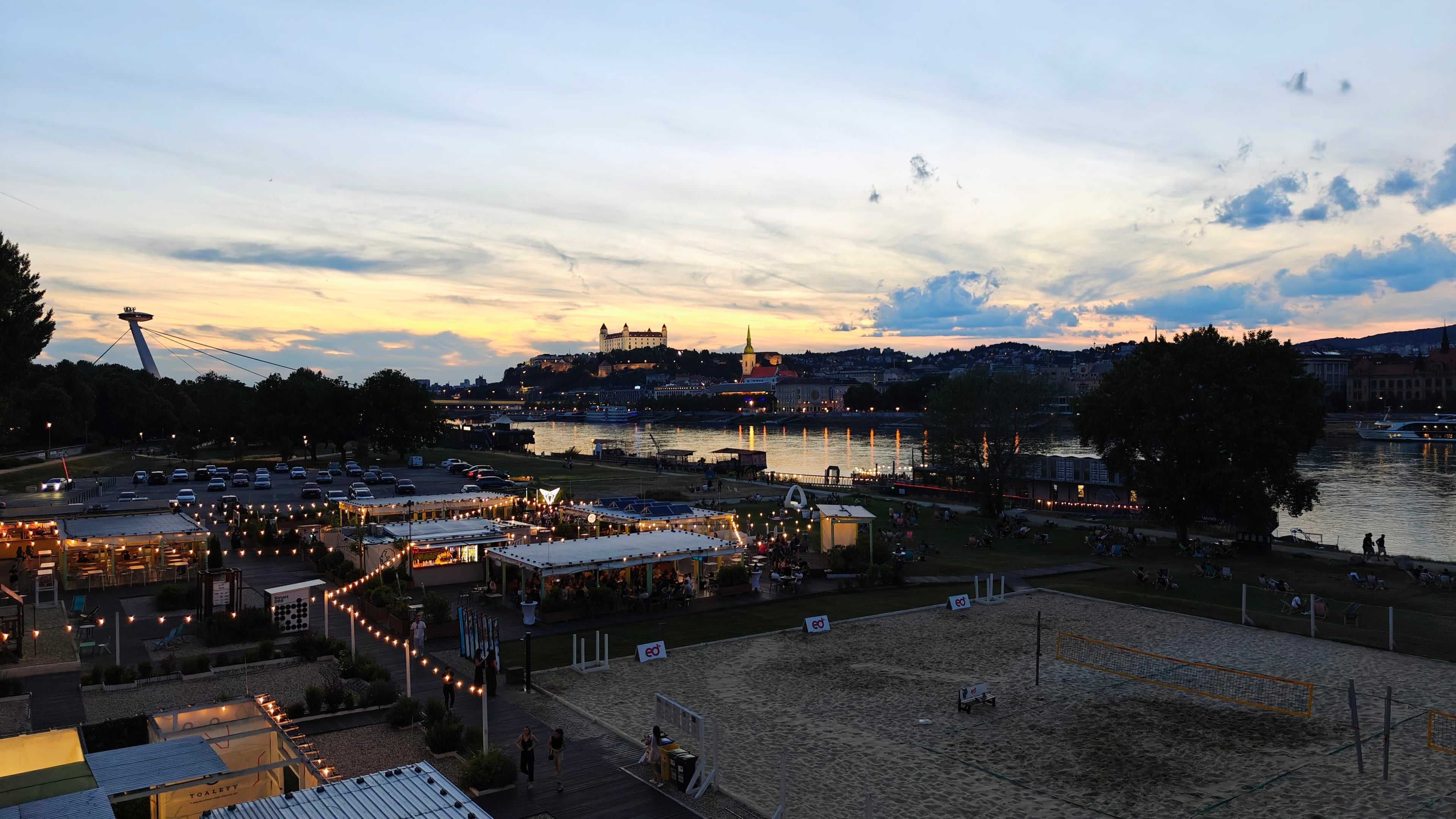
If you've spent the whole day exploring and are just looking for a place to relax, grab a beer, and chat with a friend, this is—in my opinion—the best spot in Bratislava. Tyršovo nábrežie is located on the opposite side of the Danube from the city center, providing a perfect view of the skyline. During the summer, you can find lounge chairs, several bars, and even volleyball courts.
Getting from the Airport & Around
Bratislava has a direct bus line (No. 61) that connects the airport with the Main Railway Station (Hlavná stanica), located near the city center. During the day, the bus operates roughly every 6 minutes. Overall, Bratislava has a reliable network of buses and trams, and you can easily find the best connections using Google Maps.
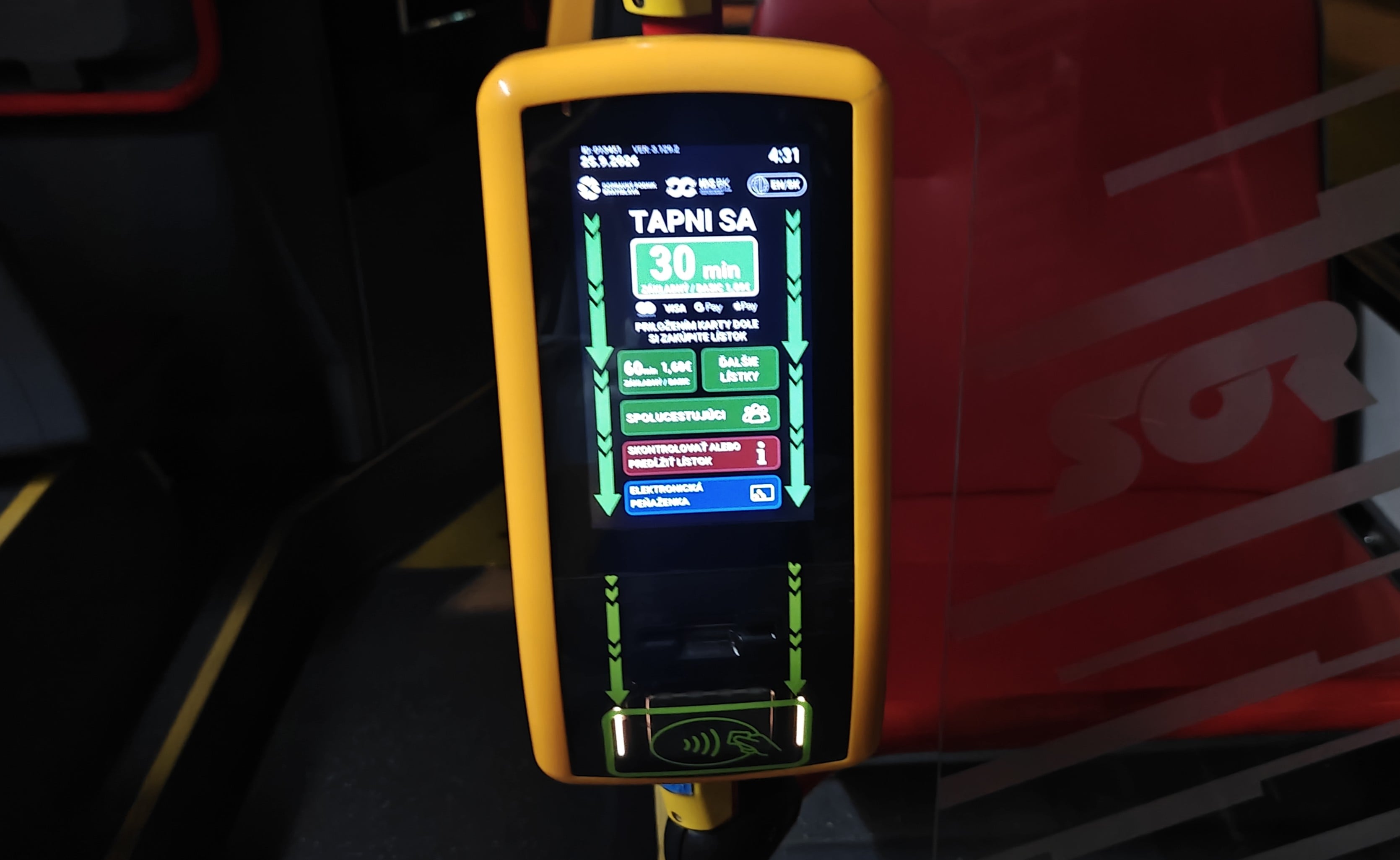
The public transport prices are as follows:
- 30-minute ticket: 1.10€
- 1-hour ticket: 1.60€
- 24-hour ticket: 4.90€
You can buy tickets directly on the bus or tram using your credit card or mobile phone (simply tap your card at the yellow validator).
Additionally, ride-sharing apps like Bolt and Uber are widely available and often very affordable. If you aren't on a tight budget or are traveling in a group, a taxi can often be a more convenient choice than public transport.
Quick Facts About Bratislava
- Population: Bratislava has approximately 475,000 official inhabitants (2021 census). However, it is estimated that more than 550,000 people actually live here, as many people from across the country move to the capital for work.
- Three Countries in One Day: From Bratislava, you can easily visit two other countries on a short day trip. The border with Austria is just across the Danube River, and the Hungarian border is only 16 km away.
- Close Neighbors: Bratislava and Vienna are the two closest capital cities in Europe, with a distance of only 60 km between them.
A Brief History Window
- 1st Century AD – The Roman Vineyard: The Romans arrived and brought the art of viticulture with them. This wine culture still thrives today, and Slovakia produces many high-quality, unique wine varieties. I definitely recommend trying some—I've listed my favorite wine spots below.
- 1563–1830 – The Royal Capital: After the Ottoman Empire occupied Buda (part of modern-day Budapest), Bratislava (then known as Pressburg) became the capital of the Kingdom of Hungary. For nearly 250 years, 11 kings and 8 queens—including the formidable Maria Theresa—were crowned at St. Martin's Cathedral.
- 1811 – Napoleon's Grudge: Napoleon's troops bombarded Bratislava twice (in 1805 and 1809) during his campaigns against the Austrian Empire. However, the biggest disaster came in 1811 when a massive fire, likely started by careless soldiers, turned the Castle into a ruin. It remained a hollow shell for over 140 years before being rebuilt in the 1950s.
- 1972 – The UFO Bridge: To build the iconic SNP Bridge (Most SNP), the Communist government controversially demolished a large portion of the historic Jewish quarter, including a beautiful Neolog synagogue. The bridge is famous for being the world's longest cable-stayed bridge with only one pylon and a single pylon-plane.
- 1989–1993 – The Velvet Revolution & Independence: In November 1989, thousands gathered in Bratislava's squares, jingling their keys to peacefully signal the end of the Communist regime (the Velvet Revolution). On January 1, 1993, Czechoslovakia peacefully split, and Bratislava became the capital of the independent Slovak Republic.
Food & Drinks
It is often said that the food scene in Bratislava punches far above its weight. In recent years, countless excellent restaurants have popped up, making the city a hidden gem for foodies.
To give you a quick overview, Slovak cuisine revolves heavily around dairy products—think milk, various cheeses, and yogurts—as well as staples like bread and potatoes.
However, to truly understand the soul of the country, you must start with the national dish: Bryndzové halušky.
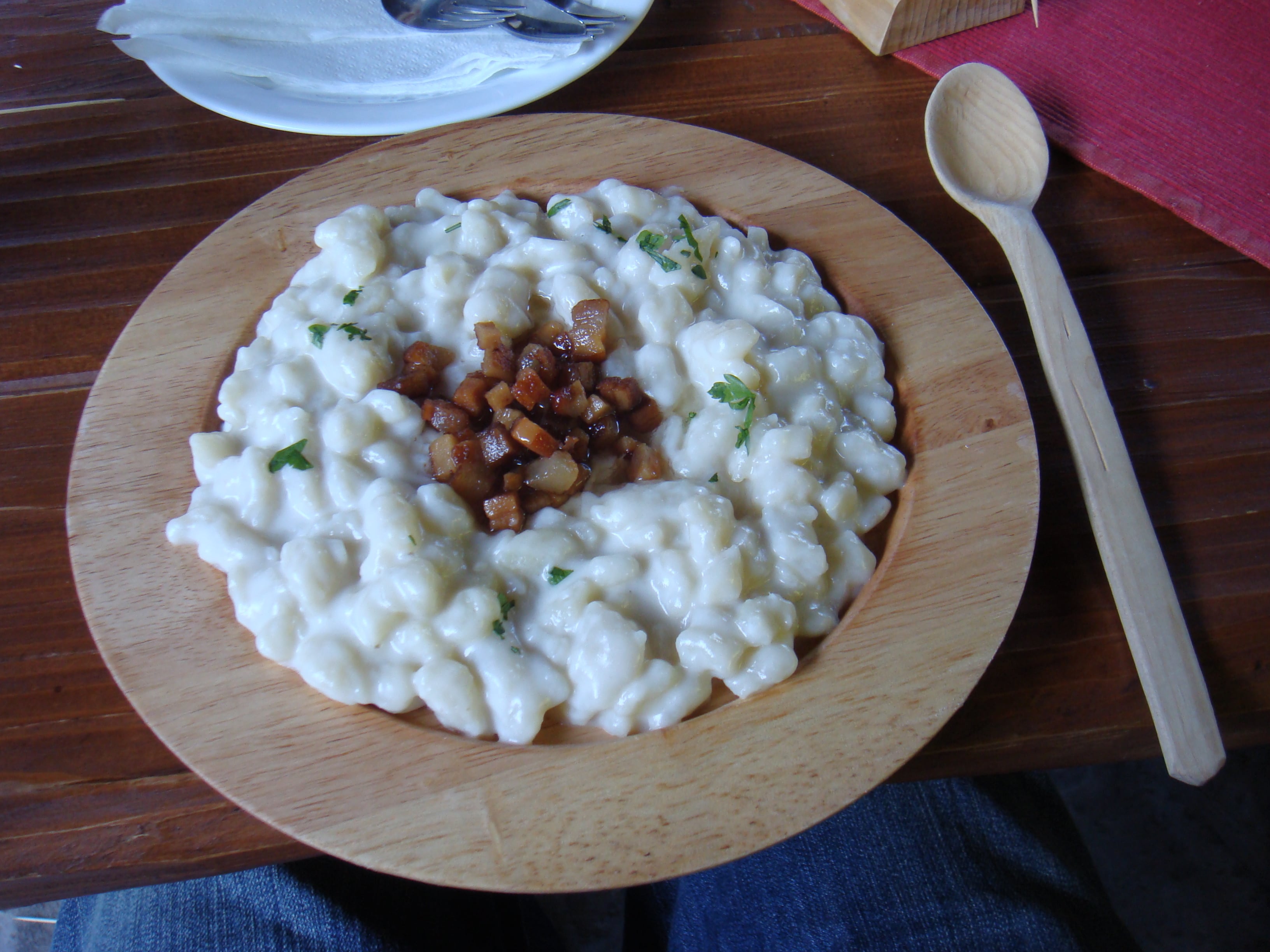
The best halušky are, of course, made by my mom, but you can find many places in the city center that prepare traditional Slovak cuisine perfectly.
Where the Dish Comes From
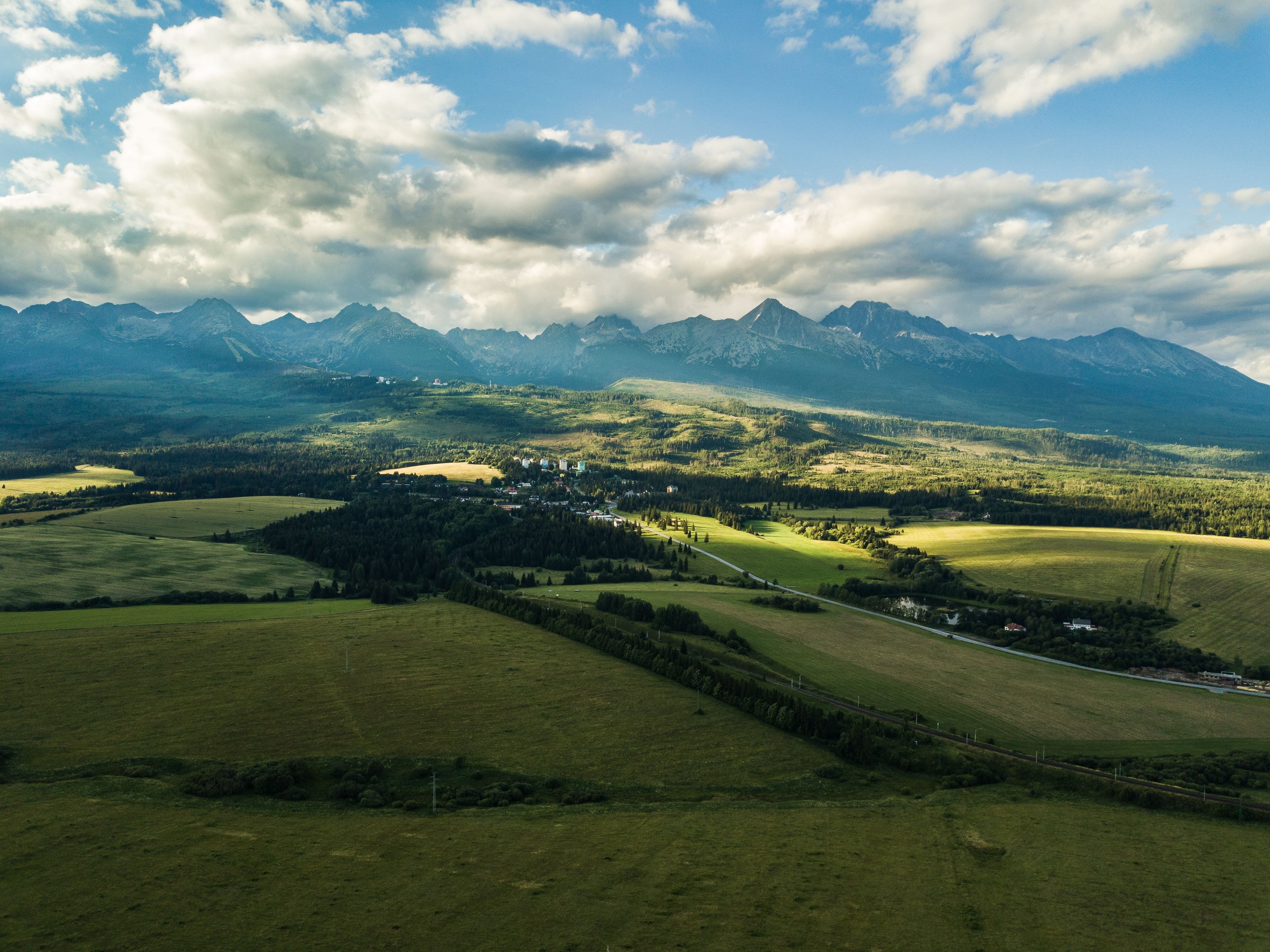
The culture of the mountain regions of northern and central Slovakia has always been the symbolic heart of our nation. This was a land of shepherds who tended their flocks, spent evenings jumping over bonfires, and warded off bears with a "valaška"—a traditional Slovak light axe.
The Legend of Jánošík
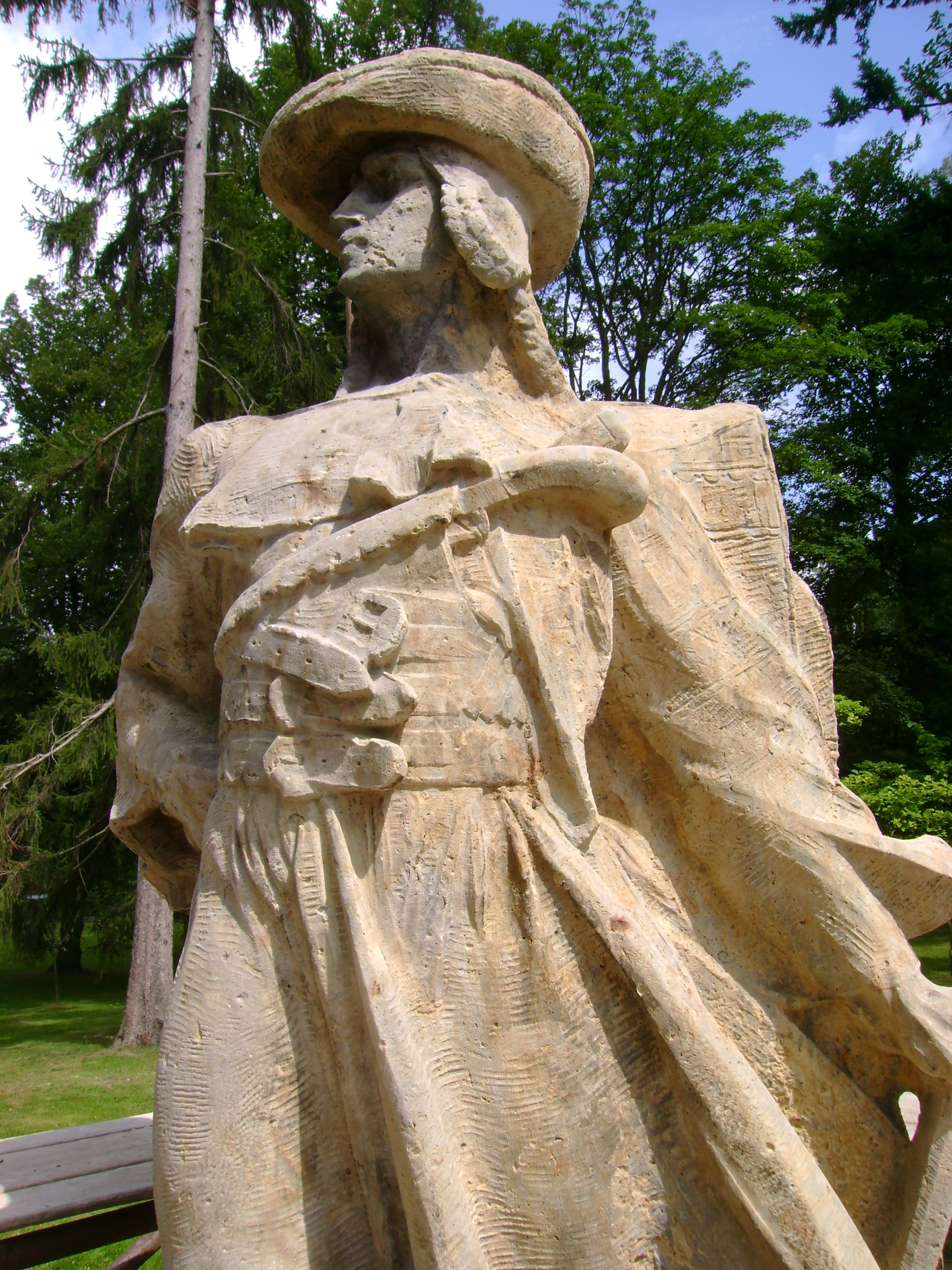
One of the most famous heroes, known by every Slovak, is Jánošík. He was a highwayman from central Slovakia. After participating in a failed rebellion against the House of Habsburg, which ruled our territory at the time, he decided to rob merchants passing through the region. Eventually, he was caught and sentenced to death by being hanged on a hook.
Later, however, his story was embraced by the first Slovak nationalists, for whom he became a model of resistance against oppression. This is how the legend was born—of a good-hearted outlaw who took from the rich and gave to the poor.
What Are "Bryndzové Halušky"?
The dish consists of small potato dumplings (made from a dough of grated raw potatoes and flour) mixed with bryndza, a creamy, salty, and pungent cheese made from sheep's milk. To top it off, it's served with generous bits of fried bacon ("oškvarky").
- The Traditional Pairing: If you want the full shepherd experience, pair your halušky with "žinčica"—a drink made of sheep's milk whey (similar to a thin, sour yogurt).
- The Modern Classic (Kofola): If you prefer something more refreshing, you must try Kofola.
What is Kofola? Created in the 1960s in the former Czechoslovakia as an alternative to Western drinks like Coca-Cola or Pepsi, Kofola has a completely different flavor profile—less sweet, with notes of licorice and herbs. Its biggest specialty is that it is often served on tap ("čapovaná"), just like beer. It's the go-to drink for Slovaks who aren't drinking alcohol, and for many of us, it tastes like childhood—the reward you'd get at a mountain hut after a long family hike.
Where to Find the Best Halušky
There are many places in Bratislava where you can enjoy authentic halušky. Here are my top recommendations:
-
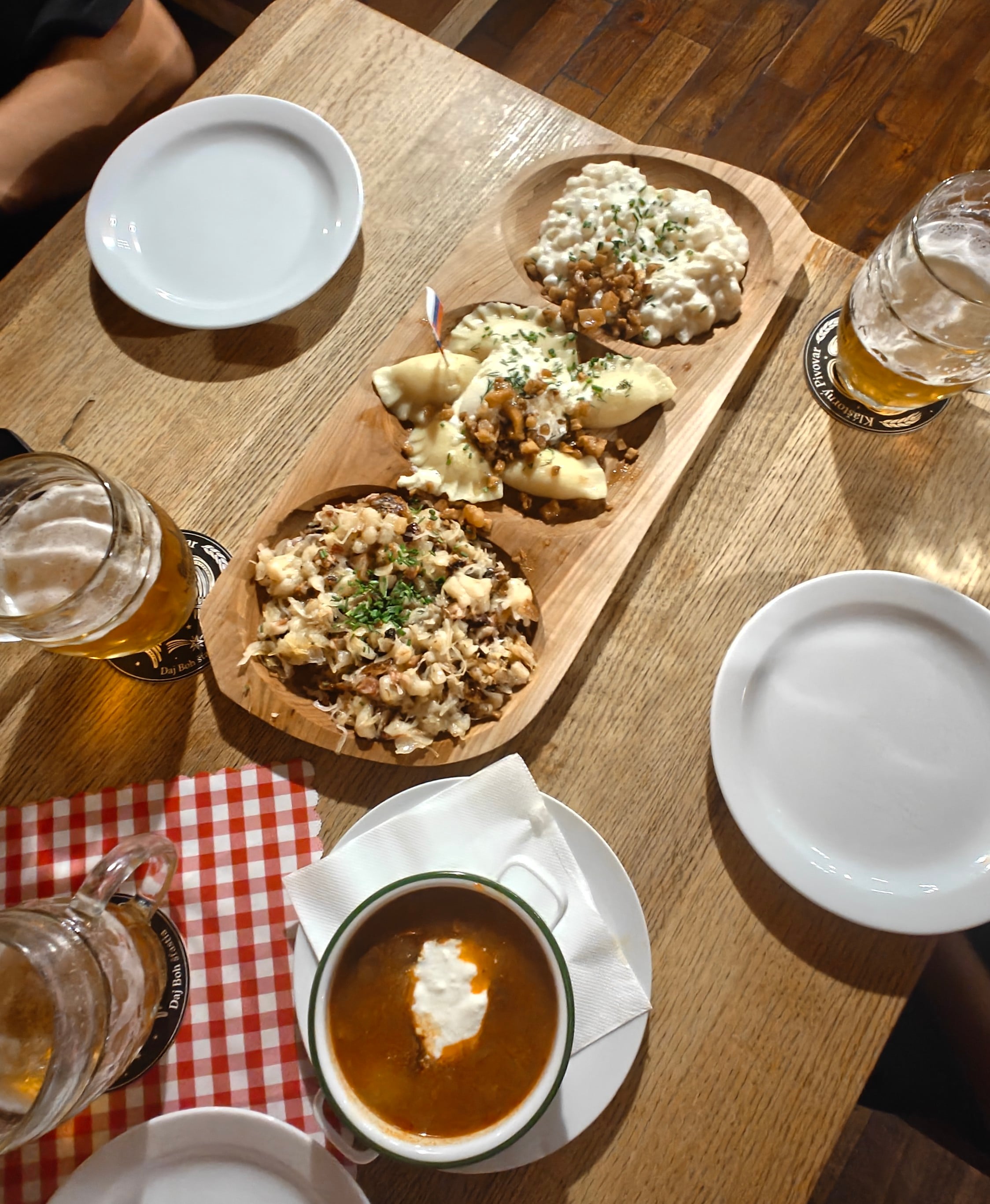
Slovak Pub A labyrinth of 11 rooms, where each one represents a different chapter of Slovak history. They use fresh ingredients from their own organic farm. If you want to try a bit of everything, I recommend the "Slovak Plate"—a mix of national specialties for around 12.50€.
-
Bratislava Flagship Restaurant Located in a grand building that once housed a cinema, this is one of the largest restaurants in Europe. Like the Slovak Pub (they share the same owner), they source ingredients from their own farm and even brew their own beer. It's a great place for large groups.
-
Hladinka Beer Pub & Restaurant This place recently won a popular local poll for the best halušky in town. It's a fantastic spot if you're looking for high quality and a great beer to go with it.
-
Haluškáreň Perfect for a quick bite without the long wait. This "fast food" style spot serves smaller portions at very affordable prices (around 5.90€), making it ideal if you just want to taste the dish while on the go.
Local Budget Breakfast: The "Treska & Rožok" Combo
If you want to start your day like a true local and save some money, head to any supermarket for a combination you won't find anywhere else: Treska and Rožok.
- "Rožok": A crescent-shaped white bread roll. While it might look like a small baguette, its texture is unique. It's a staple of the former Czechoslovakia, and you'll rarely find the exact same thing anywhere else in the world.
- "Treska": A cold salad made from boiled marinated fish, mayonnaise, and vegetables.
A bit of history: This recipe was invented in Slovakia in the 20th century. During a meat shortage, the state looked for ways to increase the consumption of fish, which was more accessible thanks to ocean imports. It quickly became a national favorite.
How to eat it: You can eat it the "proper" way with a small spoon, taking bites of the "rožok" in between, or do it the authentic way—using the "rožok" itself to scoop the salad directly out of the cup.
Insider Gem: Palacinka Lacinka
If you want to experience a place that hasn't changed since our parents were students, you must visit Palacinka Lacinka. This unassuming little shop is a personal favorite for many locals—I used to go there with my high school classmates, and my parents did the same back in the day.
They offer about 50 varieties of pancakes ("palacinky"), both sweet and savory, at unbelievable prices (around 0.60€ per pancake). My personal favorite is the one with "Niva" (a local blue cheese).
Nightlife
Bratislava is a relatively compact city and a major hub for students. Because of this, the nightlife scene is quite vibrant, especially during university semesters and on peak days like Fridays. In this section, I'll show you a few of my personal favorite spots and guide you through the best areas to explore after dark.
Viecha pod hradom
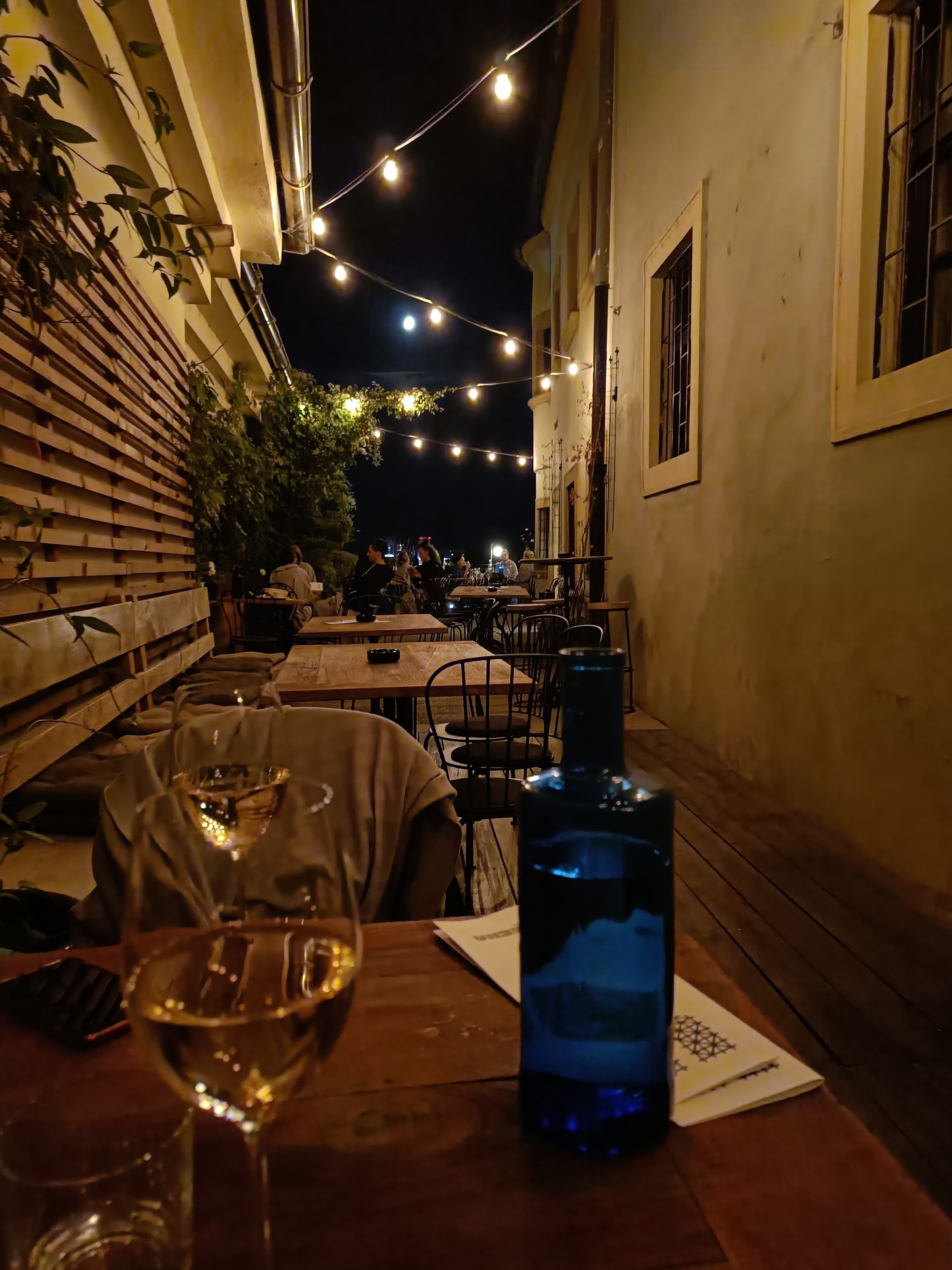
My favorite spot for quiet evenings with friends. It's located right at the foot of the castle, and in the warmer months, you can sit on the terraces, which always have a great atmosphere. They serve traditional wines from Slovak vineyards, and they also offer "tank wine" (wine on tap) at very reasonable prices.
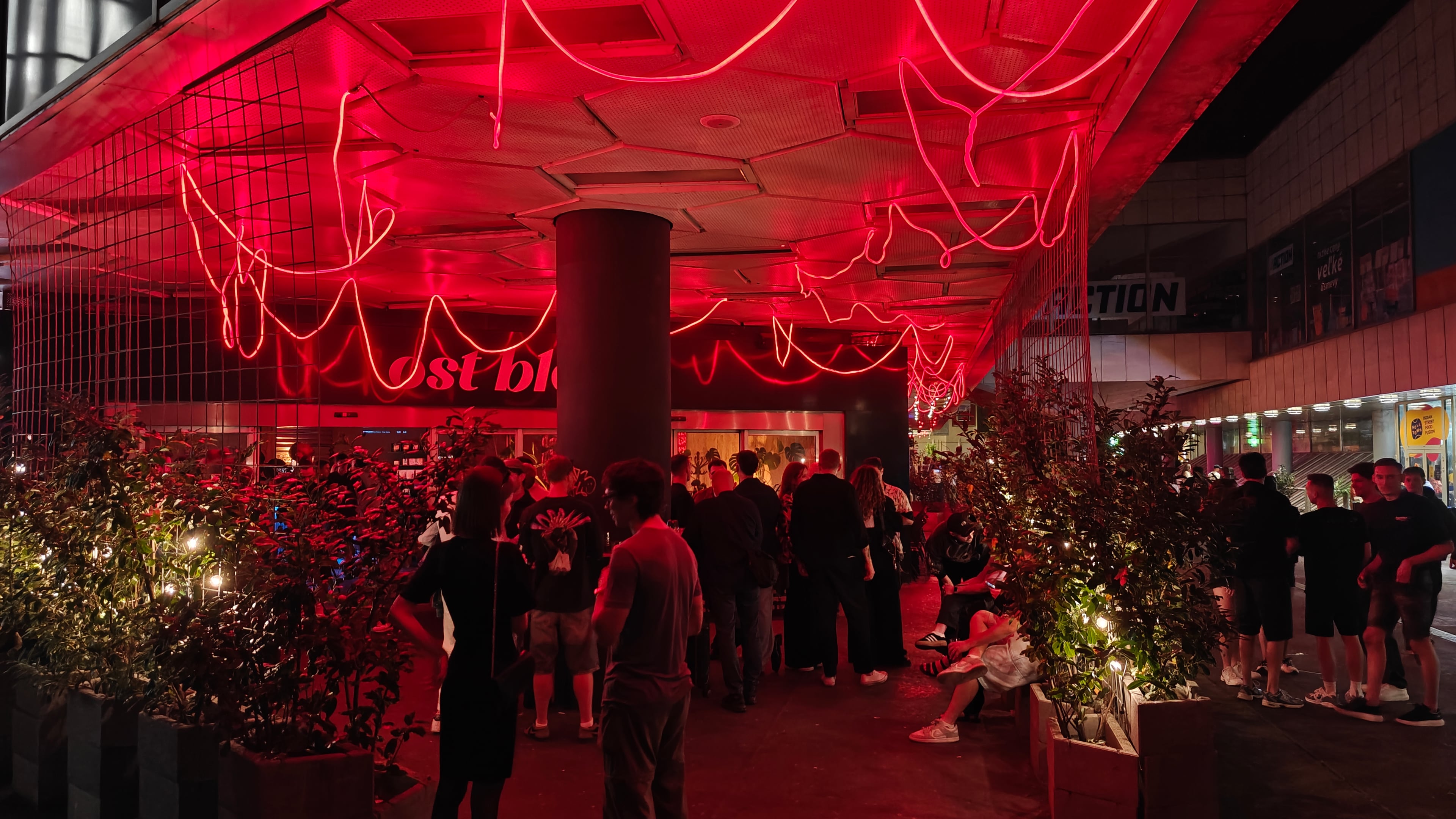
KC Dunaj
A large hipster-style bar that also doubles as a club, featuring a summer terrace with a great view of Bratislava and the castle. They start charging an entrance fee after 11:00 PM, especially if there's an event, so I recommend arriving early. It gets very crowded on typical days like Friday, mostly with a younger crowd. The bar is located at the top of the building, and there are several other cool bars with a hipster vibe on the floors below.
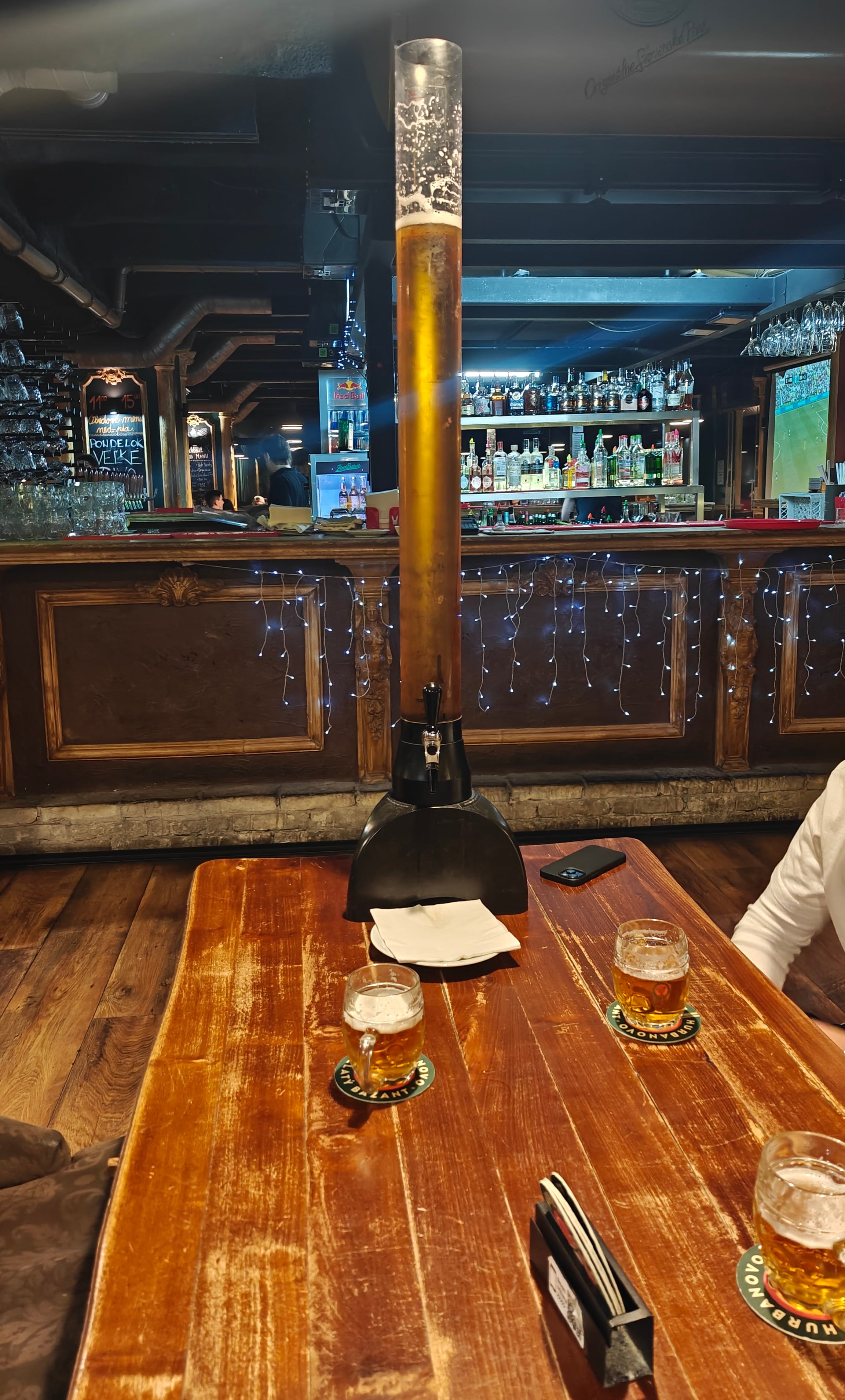
U Zlatého bažanta
Best for a group of friends, ideal for pre-drinks: This bar has the vibe of a typical Czecho-Slovak pub right in the city center. However, what makes it really interesting are the various beer promotions it offers on different days of the week. The deals vary, but the result is always the same: a large beer for 2€! Besides that, they offer so-called "giraffes" (beer towers), where 5 liters can cost only 10€ if you catch the happy hour (usually until 7 p.m.), making it a great place for pre-drinks.
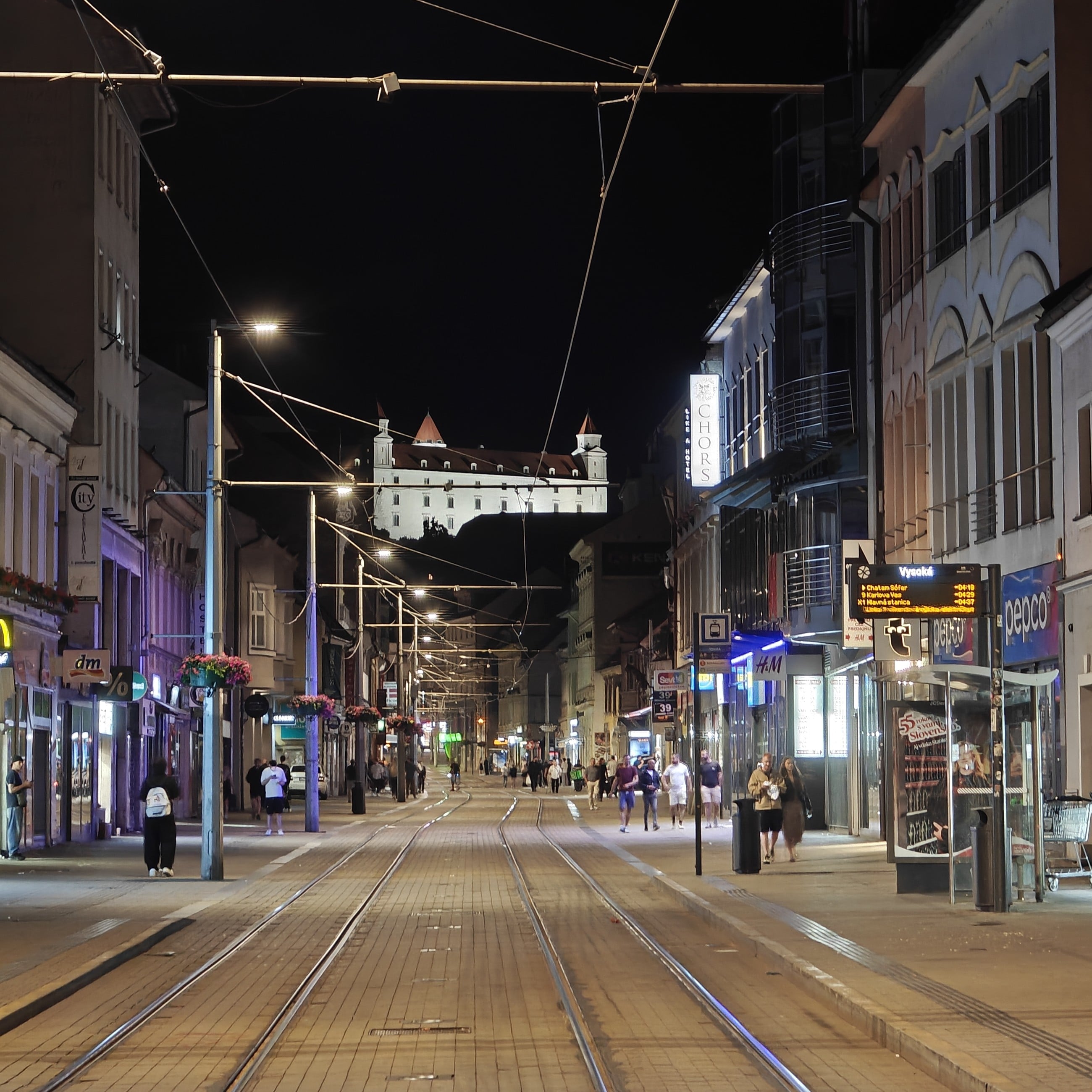
Nightlife Districts
Besides the location around KC mentioned above, there are several other areas in Bratislava where nightlife is concentrated:
Area around Ventúrska Street
Here you can find many of the fancier bars in the city. However, there is also a place called Studňa, which has strong ties to folklore groups who occasionally perform live. It's a great place to try "Borovička", a traditional Slovak spirit. There is also a karaoke bar that we visit often, though whether it turns into a great night depends entirely on what the crowd puts on.
Obchodná Street
Obchodná was once infamous for late-night scuffles, but it is now considered mostly safe thanks to a new police station on the street. Generally, the bars here are in the lowest price category, but places like Štartér or Barón could be great for pre-drinks if your budget is tight. You will definitely find the best prices for drinks here, especially shots.
Honorable mention: Viking kebab
If hunger hits you in this area—especially late at night after a few drinks—nothing "slaps" harder than this kebab.
Mlynská dolina (The Student District)
The last area is very local. It is further from the center, so you need to take a bus (line 39) or a taxi. There are dormitories for university students, and if you hit the right day, there are university parties in clubs like UniK or Klub39. If you visit this area, you will have a very "Eastern European" experience, as the dorms were built under communism and haven't changed much since. Both clubs there have seen a lot. The few times I went, especially in winter, it felt like stepping onto the set of a film about life behind the Iron Curtain in the 1960s...
Viewpoints
Seeing a city from above is always worth the climb—it helps you understand how the place fits together. Here is my list of the best viewpoints in Bratislava:
-
UFO Bridge An iconic yet controversial symbol of the city. Built during the communist era, its construction unfortunately led to the demolition of a significant part of the historic Jewish quarter, including its grand Neolog synagogue. Today, the "UFO" structure atop the bridge pylons houses a high-end restaurant and an observation deck. While the restaurant is pricey, you can buy a ticket just for the panoramic terrace. Prices vary by time slot, but a ticket generally costs 12.50€ for adults and 10.50€ for students. Check the current rates here.
-
Old Town Hall (Stará radnica) The Old Town Hall has a tower located in the very heart of the Old Town and provides a great view. Basic entry to the tower is 4€, but it can be combined with the Apponyi Palace and the exhibition part of the Old Town Hall where the Museum of City History is located. More info and admissions here.
-
Michael's Gate – mentioned in the "Top places to visit" section.
-
Castle Hill – already mentioned in the "Top places to visit" section.
-
Slavín – already mentioned in the "Top places to visit" section.
Useful Links and Apps
- Google Maps: The best tool for navigation and real-time public transport connections.
- Uber & Bolt: The most reliable and affordable way to get around via taxi apps - Bolt is far more used so the wating times are shorter.
- Visit Bratislava: The city's official tourism website is a great resource for up-to-date events and info: visitbratislava.com.
The Bratislava Card
If you plan to visit at least two paid attractions, the Bratislava Card is highly recommended. It offers excellent value, with the top benefits being:
- Unlimited Public Transport: Free travel across the city.
- Free Guided Walking Tour: A great way to get to know the historic center.
- Free Entry to 14 Museums & Galleries: Including Michael's Gate, the Old Town Hall, Pálffy Palace, the Slovak National Gallery, and the Museum of History at Bratislava Castle.
- Extra Discounts: Notable deals include a 40% discount on a wellness center near the airport (perfect for relaxing after a flight for just 12€) and 10% off at popular restaurants like Bratislava Flagship or Slovak Pub, and many more.
Pricing:
- 24 hours: 30€
- 48 hours: 36€
- 72 hours: 39€
The card is available for purchase online. You can find the full list of benefits at bratislavacard.com.
Perfect Itinerary for a day in Bratislava
While the "perfect" day is subjective, here is how I would spend 24 hours in Bratislava to get the best out of it.
-
Morning: Dive in with a Free Walking Tour When I'm in a new city, I love to start the day with these free walking tours, and if you are not doing this, especially in Europe, I think you're missing out on a lot. These tours are tip-based, so the guides are always friendly and genuinely work to earn it. The tour will take you through the main sights of the city center and provide you with interesting facts about history, legends, and life in Bratislava. There are several highly rated walking tours in Bratislava, but the best ones seem to be Discover Bratislava and Walking Sebastian. In addition to general city tours, "Discover Bratislava" offers a 20th-century tour, providing a historical insight into the Slovak fascist state and the subsequent communist era - a very interesting history window in my opinion.
-
Lunch: The Halušky Experience Stop for lunch at one of the restaurants recommended in the Food & Drinks section and taste some traditional Slovak food.
-
Early Afternoon: Art & Caffeine After lunch, enjoy a coffee and a bit of Slovak art at the Nedbalka Gallery.
-
Late Afternoon: Get Lost in the Old Town Until evening, get lost in the Old Town or visit the Blue Church if it wasn't part of the morning walking tour.
-
Sunset: Views from the Old Bridge Catch the sunset at the Old Bridge (Starý most) with a view over Bratislava.
-
Evening: Wine or Party? Treat yourself to some wine at Viecha pod hradom (if you want a quieter, more romantic atmosphere), or if you want something more lively, go to KC Dunaj or other places I discuss in the Nightlife Guide.
Hero photo: Trnava University / Unsplash.