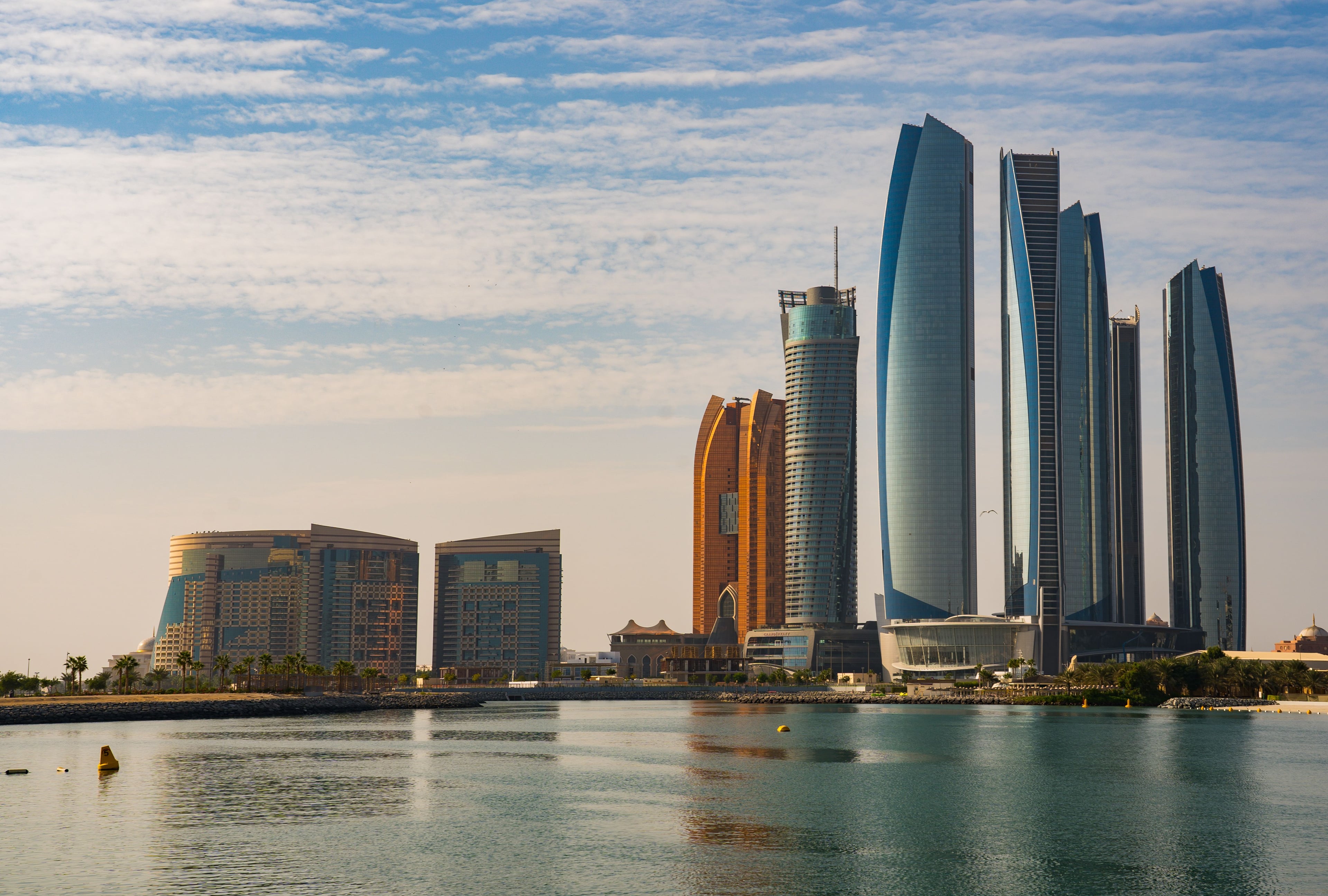
Say "Abu Dhabi" and most people file it away next to Dubai: a city of luxury built for businessmen and Russian influencers. Let me disprove that straight away. I visited Abu Dhabi as a 20-year-old student on my way to an exchange semester in Singapore, on a very limited budget, with a bag full of food my mom had cooked for me. It was my first stop outside Europe ever, and even though I've visited plenty of world metropolises since, Abu Dhabi has stayed special to me.
A lot of people question whether this city has any "soul" — after all, almost everything you see here was built within the last few decades. In 1960, only around 25,000 people lived here. But for me, that's exactly what makes it interesting.
The whole city sits more or less on the desert. Not the desert with sand dunes that comes to mind first, but a flat sandy-clay plain stretching as far as you can see, where summer temperatures climb past 42°C (that used to sound extreme to me — sadly it's not that exceptional in Europe anymore either).
The whole thing feels like you're playing one of those city-building games. You start a new game and you get a big empty plot. And because it's the kind of game where the money for construction bubbles up out of the oil fields next door and you never have to think about it, you just start building. First a massive airport and long, straight four-lane roads. Then apartments for the residents, and housing for the workers from poorer countries further east who will build the rest. And once the basic infrastructure is done, you let your imagination off the leash: a downtown of skyscrapers for companies and hotels. An enormous white marble mosque for 41,000 worshippers. A palace for the ruler of the United Arab Emirates. And a few museums would be nice too — but they don't quite fit the city I've built so far, so I'll start putting them over here, out in the desert beyond it.
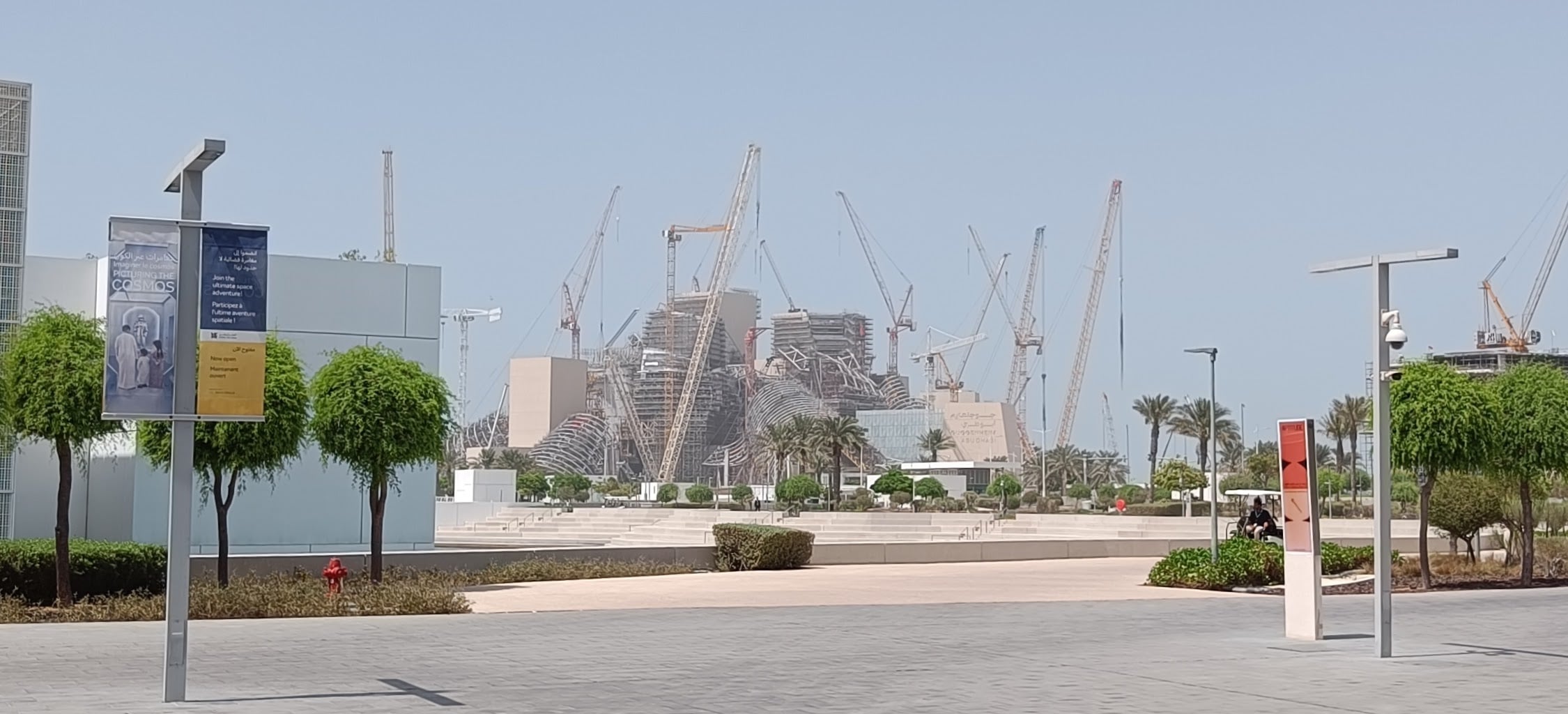
Look at a map and you'll see my story is exaggerated, of course. But I wanted to give you a sense of what my European mind was trying to make sense of when I rode fifteen minutes down a "highway" through the desert to the "cultural district", only to walk along brand-new wide roads and sidewalks without a living soul on them.
Is Abu Dhabi really only for the rich?
Abu Dhabi absolutely is a place of luxury, and you can absolutely burn thousands on dinners and hotel rooms on the 60th floor. But it's also a city of more ordinary people, many of whom came from poorer countries hoping to earn at least a little on the construction sites. And the city has infrastructure built for them too.
Abu Dhabi has plenty of space and plenty of real estate, and when I visited, accommodation prices were surprisingly low. They've crept up a little since then, but if you book in advance, the city still comes out slightly below Western European prices. Public transport is cheap, and taxis are cheaper than in Europe too. Most of the views of the stunning skyscrapers are free, and so is entry to the mosque and to the luxurious Emirates Palace hotel, while tickets to most museums and to the presidential palace cost less than 20€. So overall, I think you get "a lot of music for a few coins" here, as we say back home.
Getting from the airport and around the city
Abu Dhabi is built for cars above all, and most people here use taxis, which by European standards count as fairly cheap. But if you're on a tighter budget, don't be afraid of the local buses. At the airport you can pick up a travel card, top it up, and then just tap it every time you board. I used this method the whole time, and even though the ride sometimes took longer, I managed to get pretty much everywhere I wanted.
Top places to visit
Sheikh Zayed Grand Mosque
This is the one place you don't want to skip in Abu Dhabi. It's one of the most visually stunning mosques in the world, and on top of that it's open to tourists. Entry is free, but you need to register in advance. I recommend checking their website ahead of time to make sure your preferred time slot isn't fully booked.
The mosque sits further south than most of the other attractions — about 20 minutes by car, but it can take over an hour by bus.
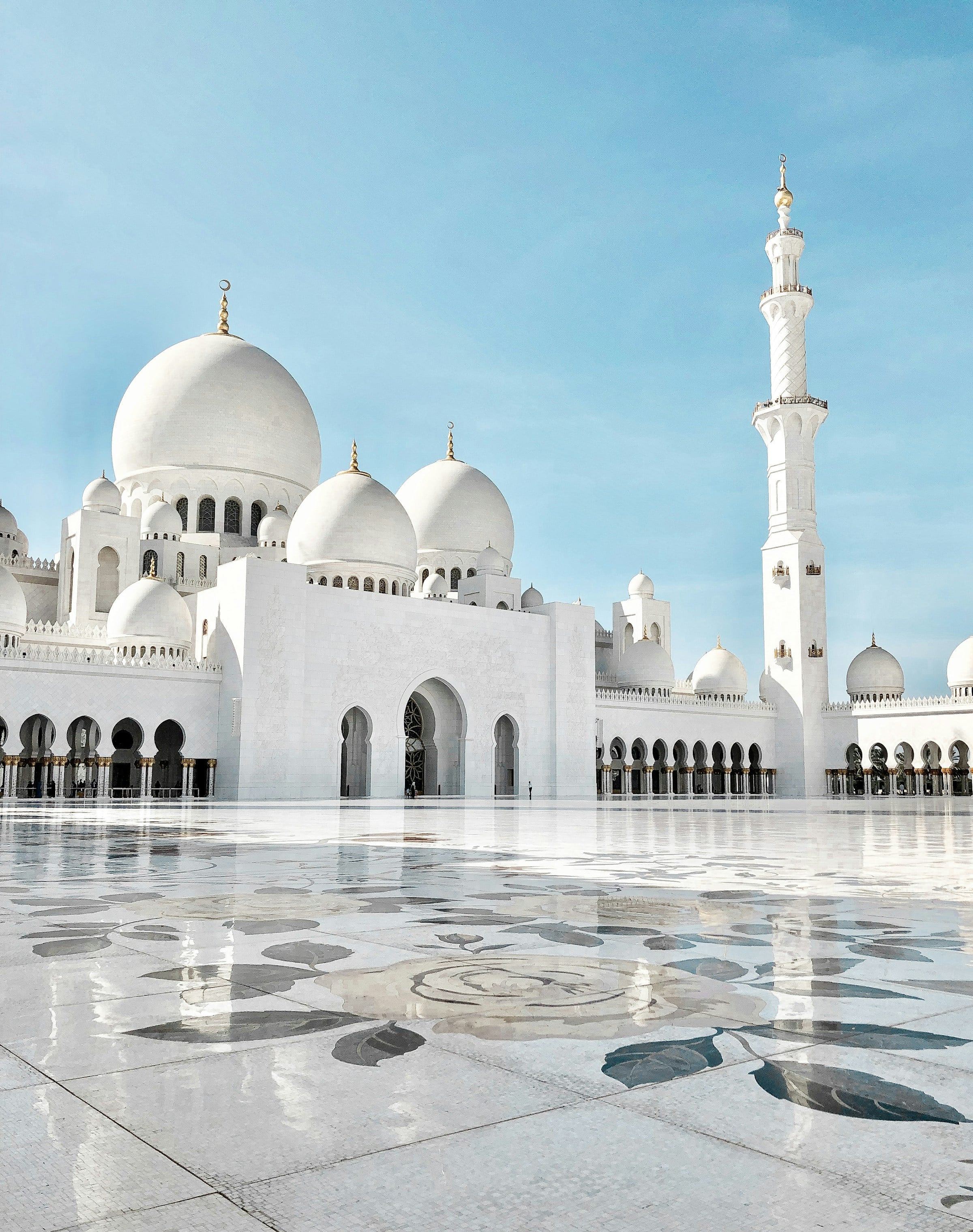
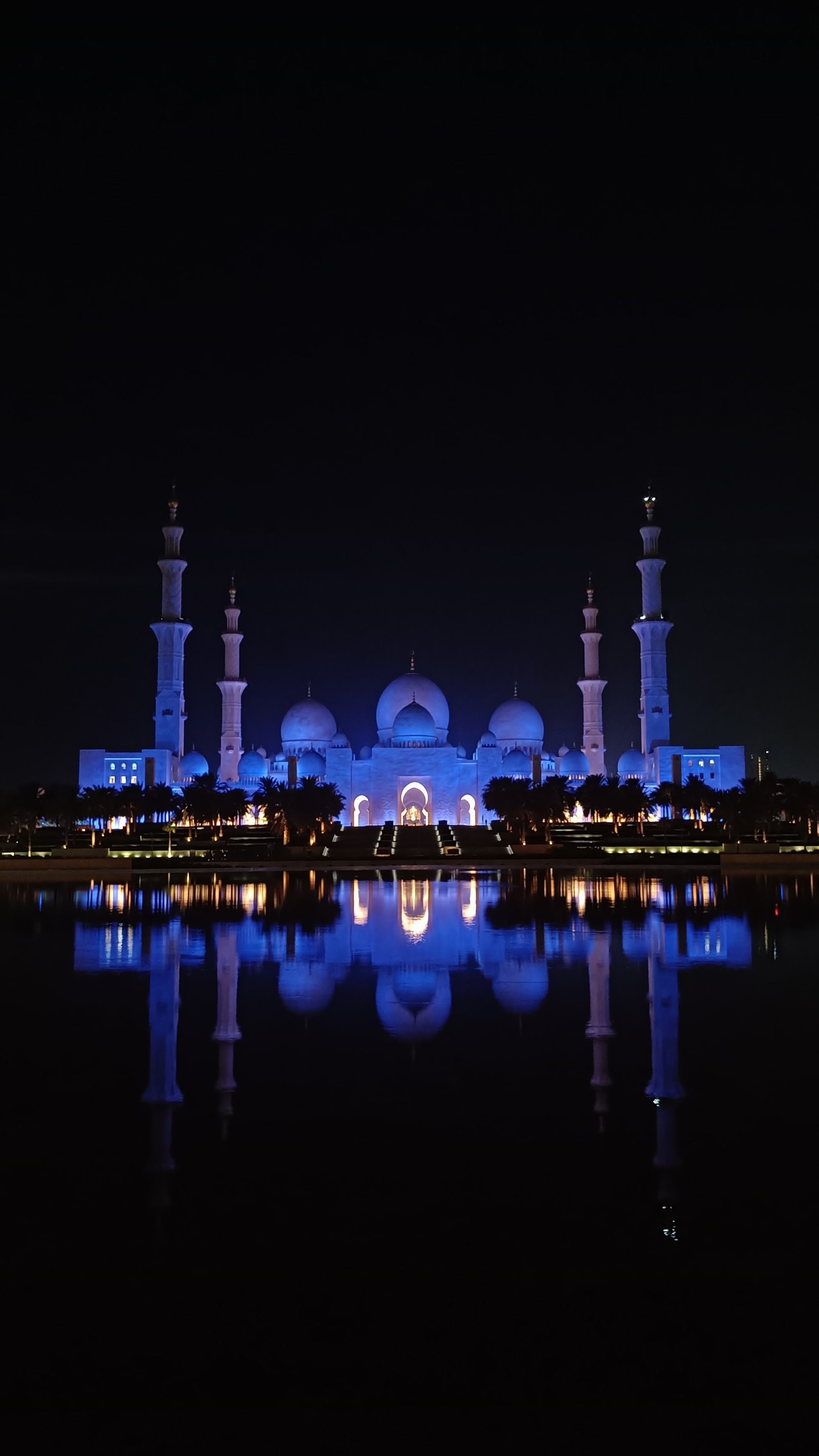
The biggest dilemma is this: visit during the day and enjoy the white marble, or come at night and see it lit up? I believe both are magical, but in the end I went for the night version.
Naturally, you need to come dressed for the dress code: men need shoulders and knees covered, women the same plus a headscarf. If you don't have a scarf, there's essentially a shopping mall underneath the mosque (yes, you read that right) where you'll definitely find one. That underground entrance doubles as the tourist entrance and separates visitors from worshippers, who enter above ground.
From there you walk along one side of the mosque, under its arcades, with a view over the courtyard and no shortage of photo points. The tour ends inside the mosque itself, where you can look in from a small balcony and take in the massive Swarovski crystal chandelier.
Qasr Al Hosn Fort and the first well
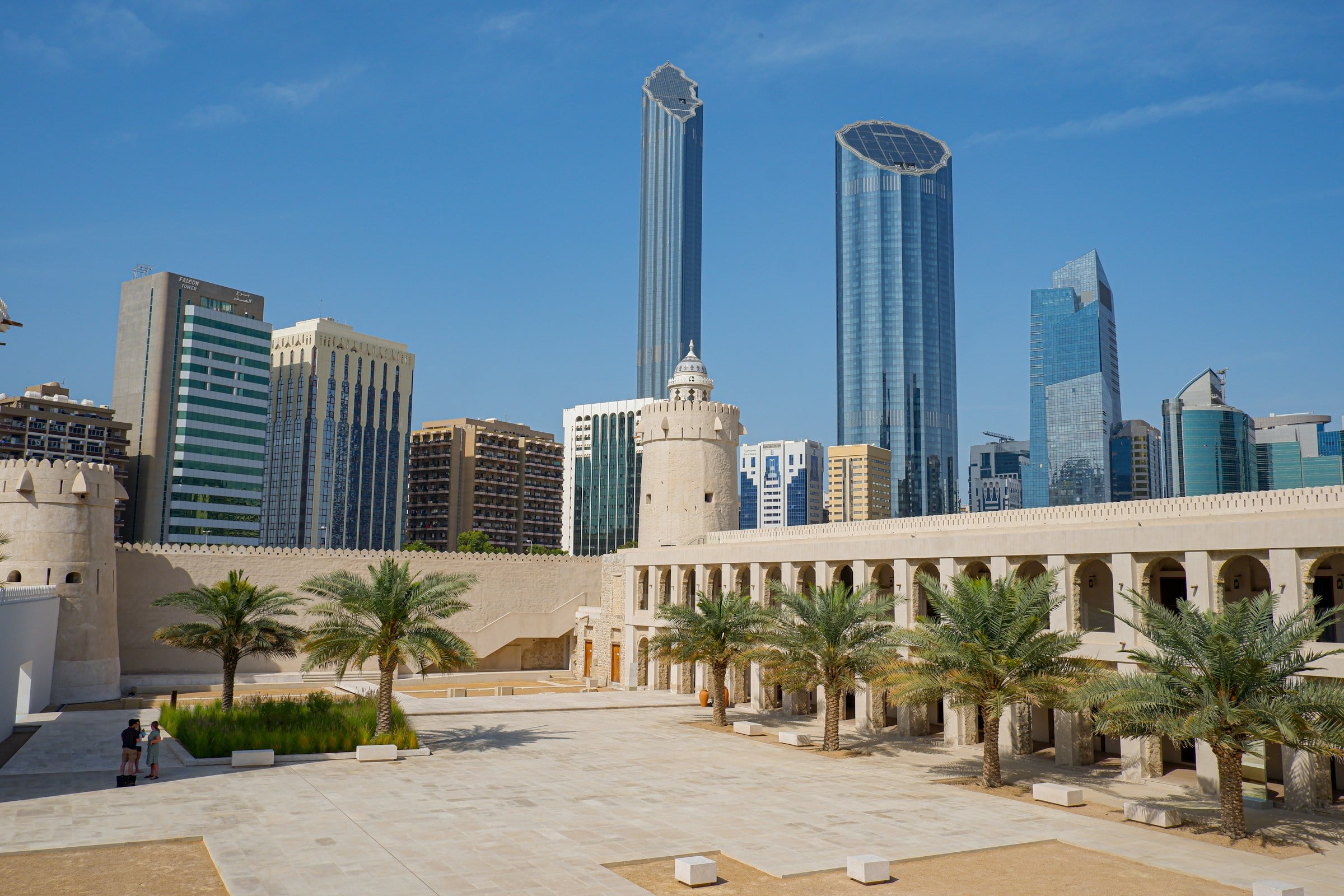
On this "square" in the center stands the oldest stone building in the city. It started out in 1761 as a watchtower guarding the only freshwater well on the island — and that well is the very reason Abu Dhabi was settled in the first place. Today the fort houses a small museum, but the square is rewarding on its own too: since it opens up some space in the middle of the city, you get a nice view of the skyscrapers behind it. I'd recommend a stop if you're staying nearby or passing through.
Three places you can do in one block
The next three places are close to each other, so you can visit them in a single go.
The Founder's Memorial
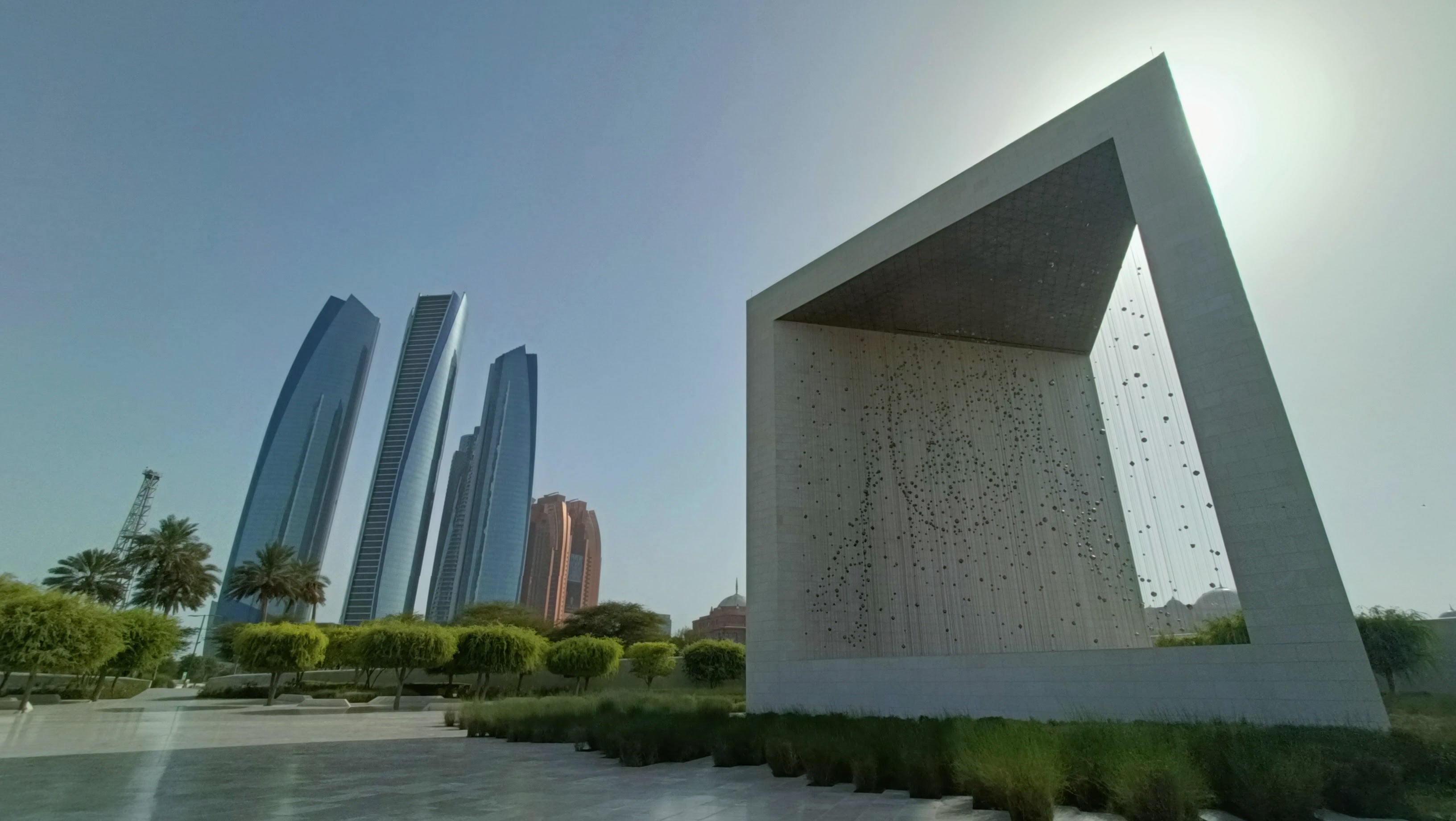
This makes for a nice destination for a walk: there's a memorial, a park around it, and above all views of the downtown behind it.
Emirates Palace Mandarin Oriental
About 15 minutes on foot from there you'll find this hotel. It's fenced off, you can sometimes watch helicopters landing here, and you get the feeling it isn't open to the public at all. But once you find the right entrance, you'll notice a thin stream of visitors flowing in.
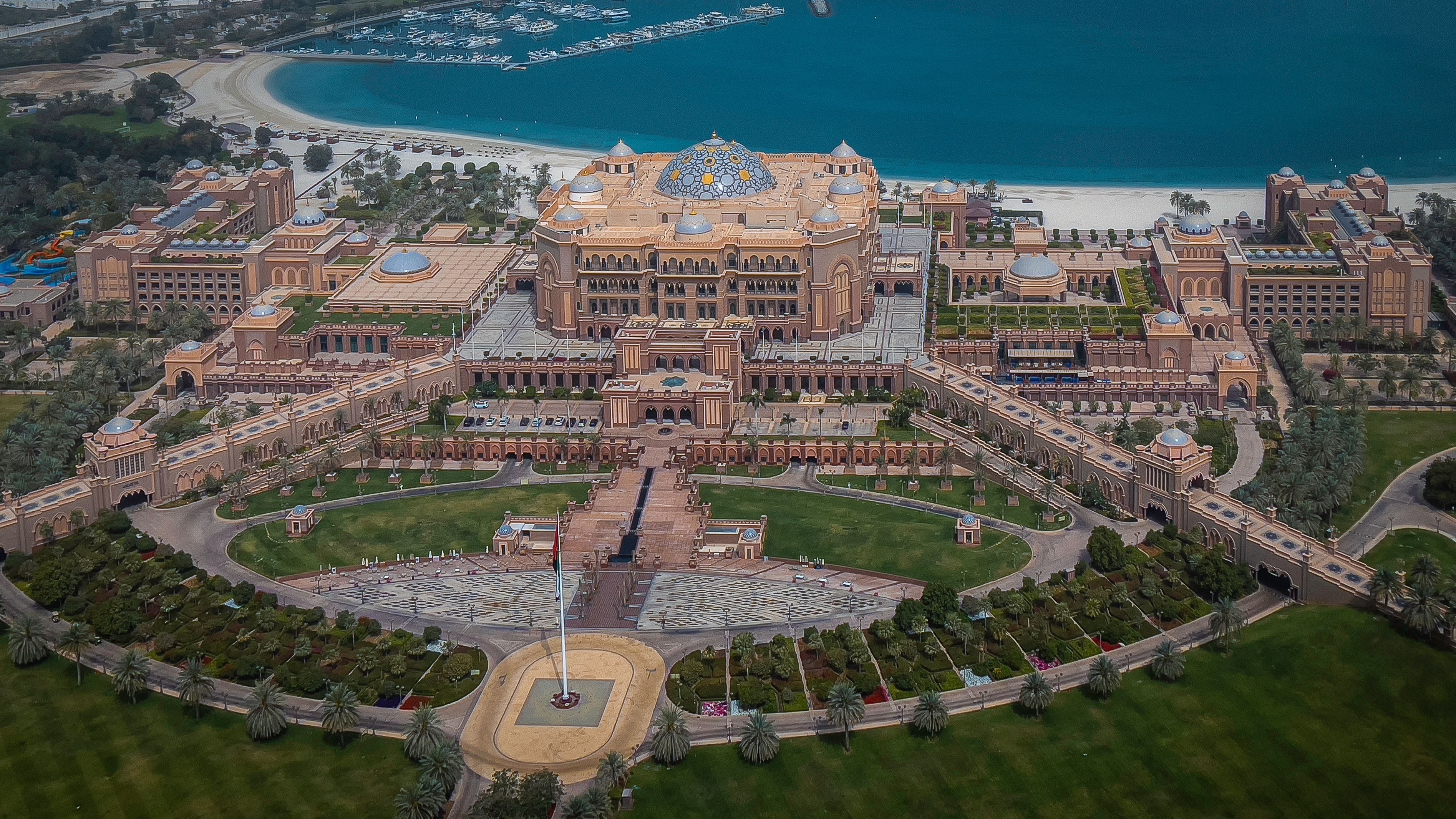
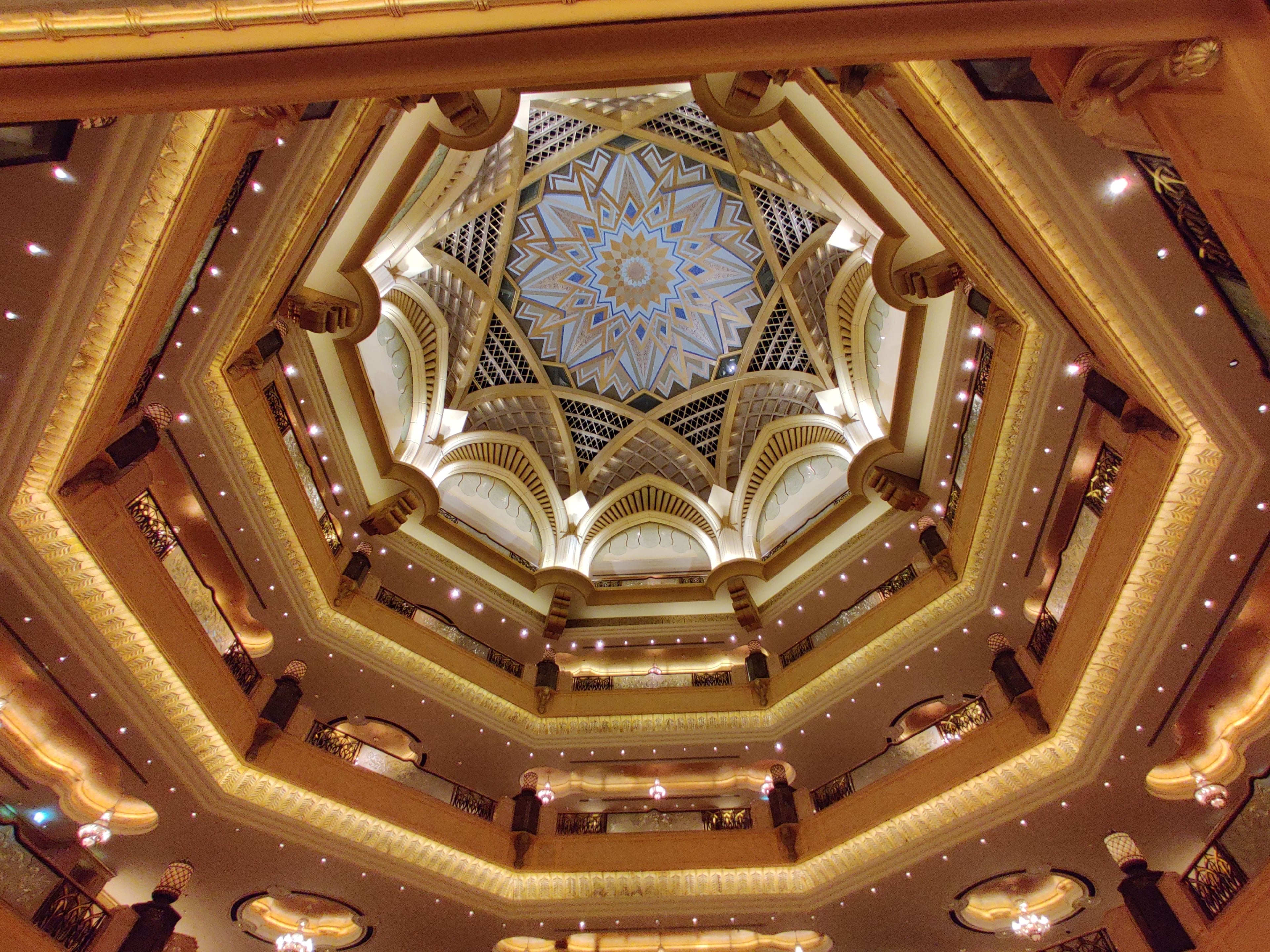
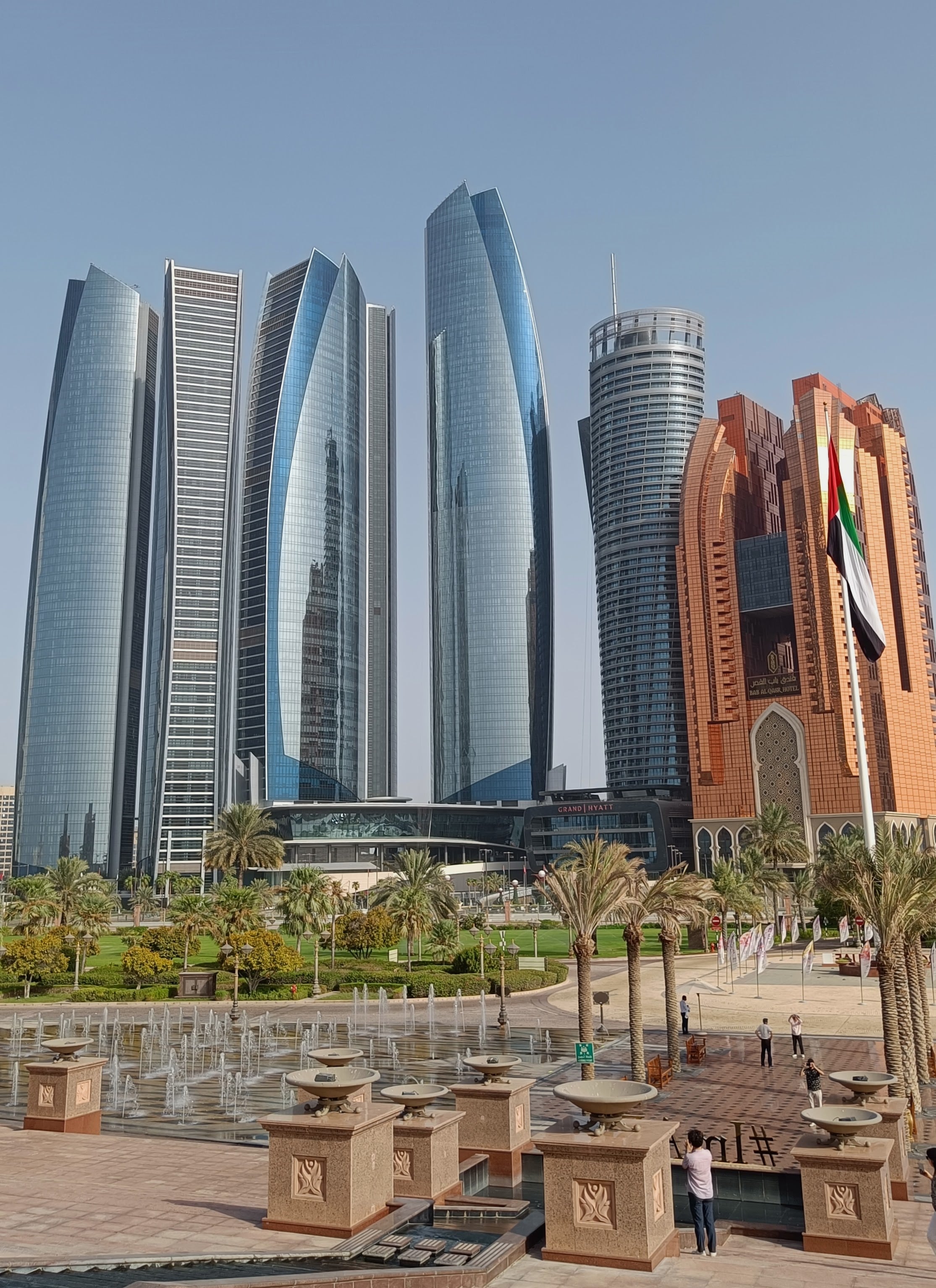
Then you can enjoy the hotel at your own pace: wander its corridors, look up at the ceiling in the main hall, take in the indoor palms, the gold door handles, the views of the skyscrapers across the way — and once you feel you've seen everything there is to see for one day, it's time for the last stop.
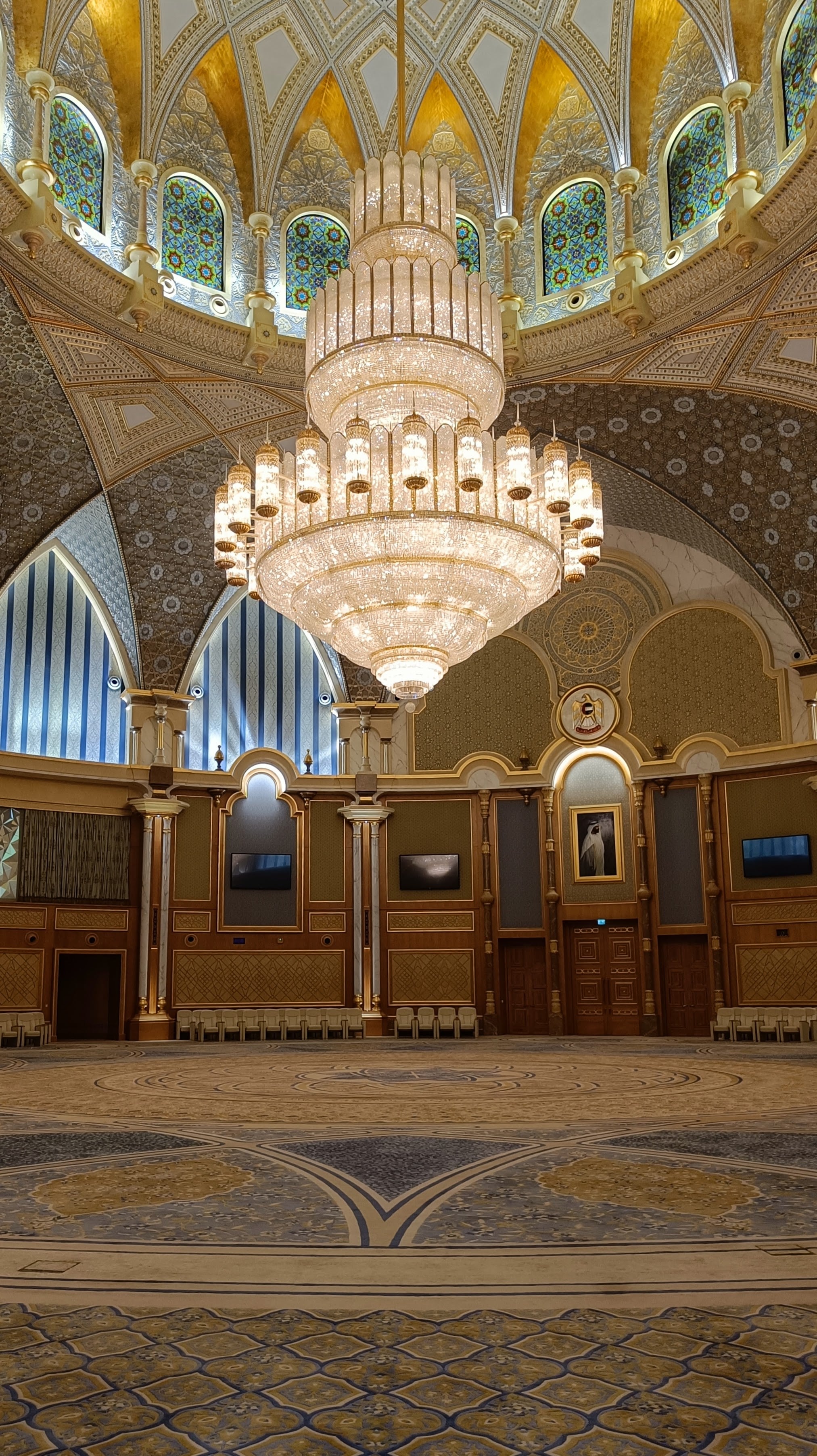
The Presidential Palace of the United Arab Emirates
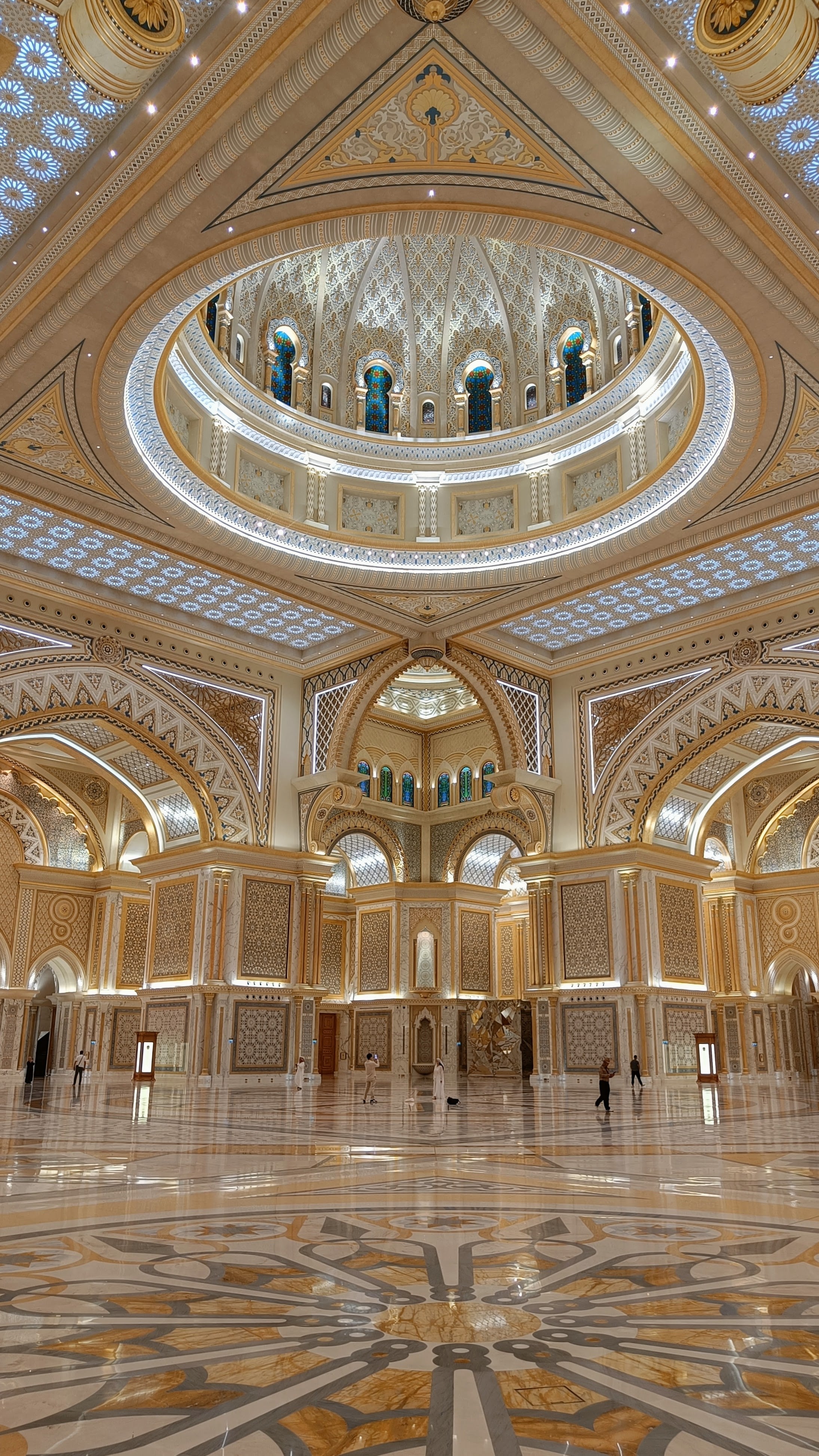
From the hotel it's about a 20-minute walk to the point where the tours start. You need to book tickets in advance and they cost less than 20€ — and they are absolutely worth it. From the entrance a bus takes you to the palace doors. Personally I had no idea what to expect, and honestly I'd rather leave you in that same vacuum of expectation — because what you'll see inside is very hard to capture in a photo or a sentence.
The Cultural District
That district of museums I mentioned earlier was still partly a construction site when I visited in 2024, but at the speed this city moves, most of it is finished by now. There are several museums here that look breathtaking from the outside and have good content inside too.
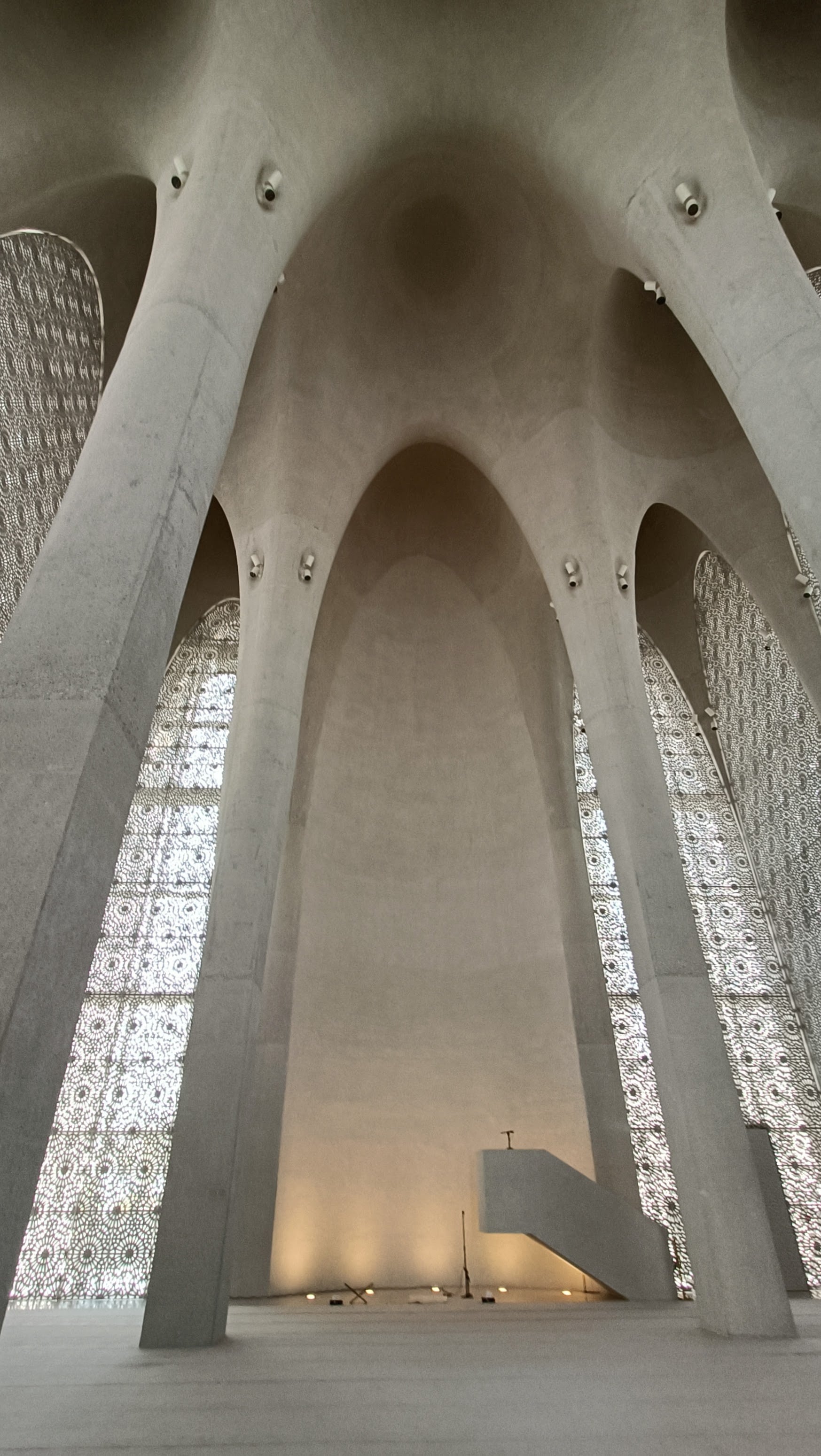
Abrahamic Family House
This complex holds three houses of worship in a modern design, representing the three religions descended from Abraham: Judaism, Christianity and Islam. All three are done in a very contemporary style, you can find a moment of quiet here, and underneath them there's a visitor center with a short exhibition. Entry is free, though at the time of writing the complex is temporarily closed — I recommend checking the official website to see whether it's open during your visit.
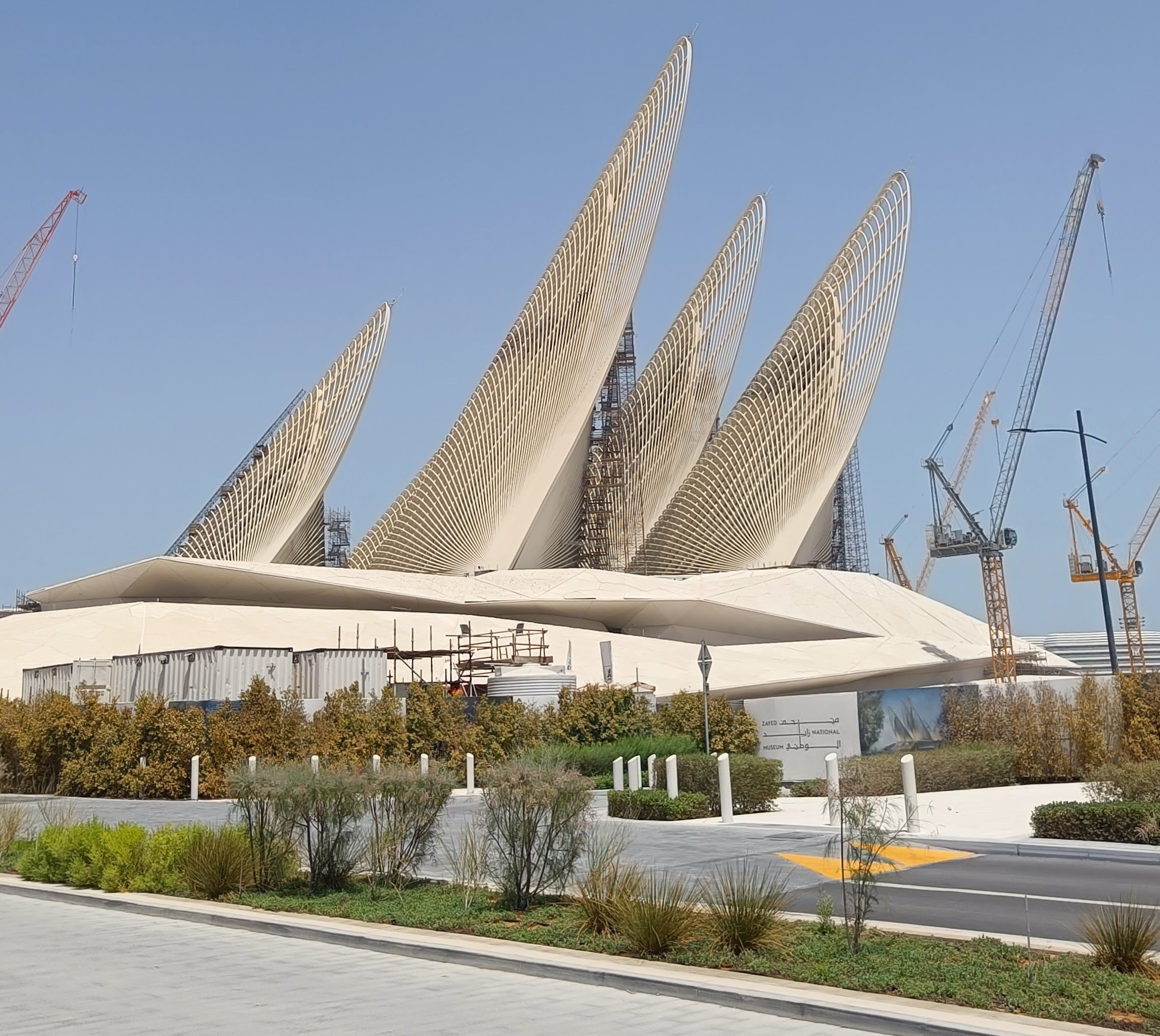
Zayed National Museum
This museum, which opened at the end of 2025, is imposing from the outside alone. It's the national museum of the United Arab Emirates and it walks you through their history, culture, nature and their vision of the future. A standalone adult ticket costs about 17€ (70 AED), but it can also be combined with the museums below.
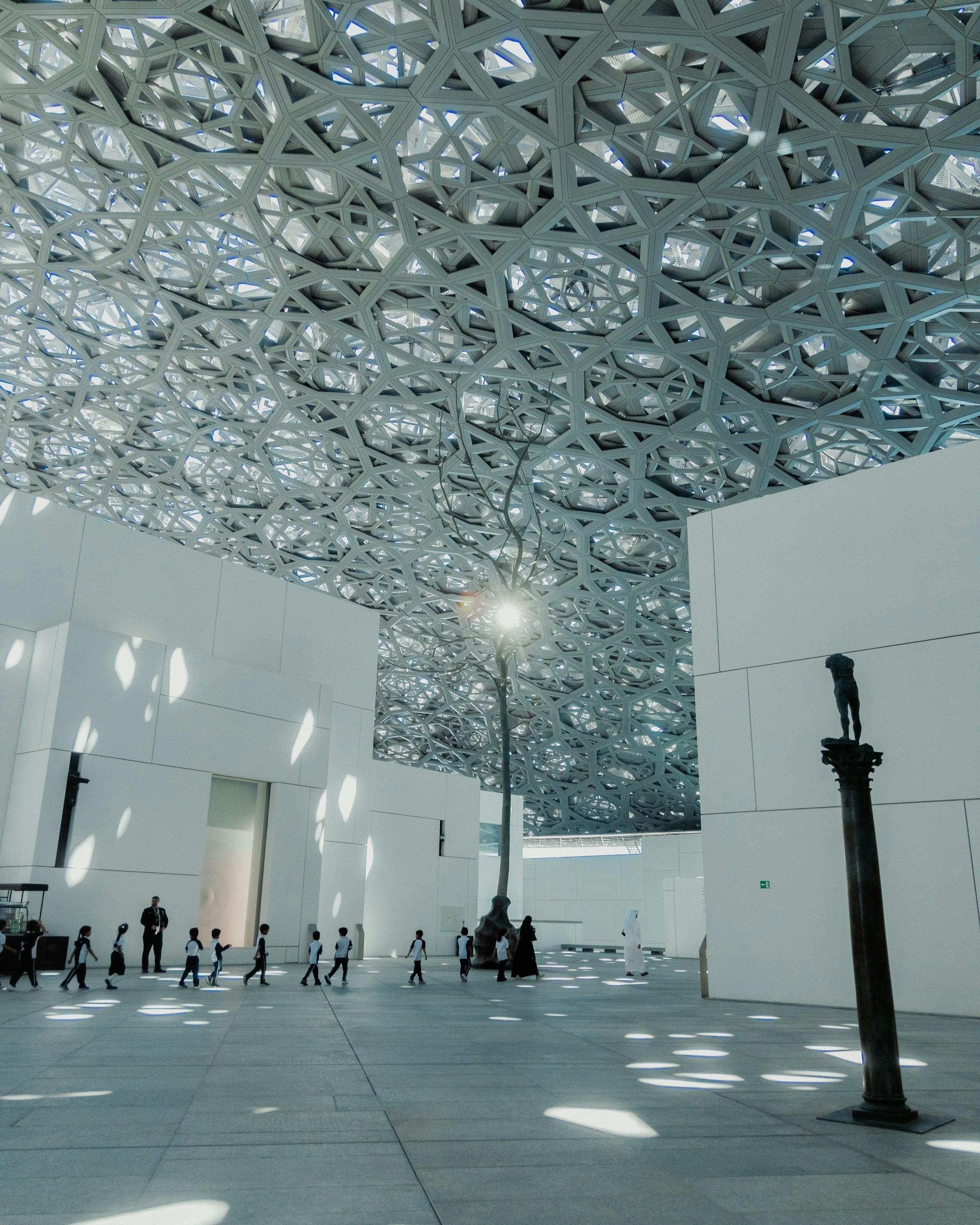
Louvre Abu Dhabi
This museum is built essentially right on the water and borrowed its name from the famous Parisian Louvre — and under a long-term agreement, many of the works on display are on loan from the Louvre and other French museums. You'll find artworks and artifacts from every corner of the world. Basic entry will run you roughly 17€ (63 AED).
teamLab Phenomena
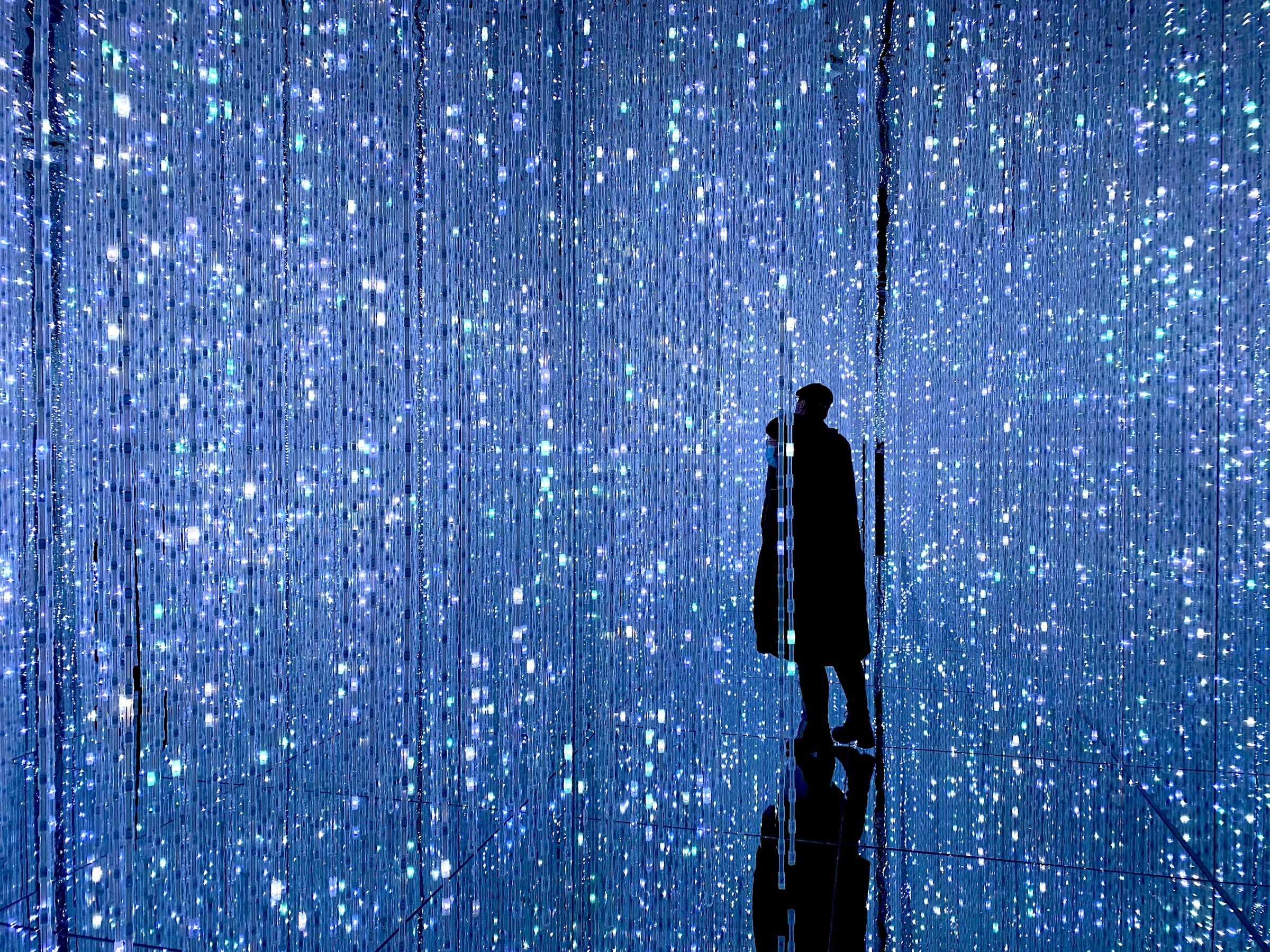
In this museum you won't find any exhibits of the kind you're used to. This is a world of immersive digital art, where you walk through enormous rooms of multisensory digital installations, light effects and projections that react to your movement. It's the work of the internationally acclaimed art collective teamLab, best known for their work in Japan.
Guggenheim Abu Dhabi
When I was there, you could only see this museum as a building site with a very strange shape — the one behind all those cranes in the photo at the start of this article. Designed by Frank Gehry, it's scheduled to open in December 2026 as the largest of all the Guggenheim museums, whose original and most famous home stands in New York.
Other places worth saving to your maps
A few more spots to note down in case you happen to be staying nearby or passing through:
- Snow Abu Dhabi — an indoor ski resort. I don't think there's much to add.
How many days to stay in Abu Dhabi?
To see all the main sights I've described above, I think 2 days are enough if you're active, or 3 if you prefer a slower pace. These are the things I find the most interesting, but Abu Dhabi offers even more — beautiful beaches and promenades, desert trips — so you can definitely find things to do for a few more days.
Combine it with a trip to Dubai
Dubai is only about an hour and a half away by car, and the intercity bus gets you there in around 2 hours for roughly 10€. So if you have more time, you can definitely visit this modern city too.
Final thoughts
Many people probably see Abu Dhabi as a slightly more boring Dubai — full of high-rises and expensive shops, the kind of place you'd ideally take out a loan to visit. In my experience, that's not the case at all. Even for a traveler with limited means, it offers plenty of attractions and views you'll struggle to find anywhere else in the world. And even though no Roman emperors ever walked the palace halls you walk through here, it's still breathtaking.